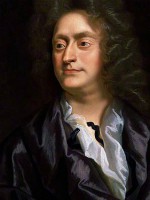
King Arthur, or The British Worthy, Z. 628
Semiopera con dialogo in cinque atti
Testo del libretto
| PROLOGO DELL’OPERA | |
| [1 - Prima musica] | |
| [2 - Seconda musica] | |
| [3 - Aria] | |
| [4 - Overture] | |
| MISTER BETTERTON | |
| Sure there’s a Dearth of Wit in this dull Town, When silly Plays so savourly go down: As when Clipp’d Money passes, ‘tis a sign A Nation is not over-stock’d with Coin. Happy is he, who, in his own Defence, Can Write just level to your humble Sence; Who higher than your Pitch can never go; And doubtless, he must creep, who Writes below. So I have seen in Hall of Knight, or Lord, A weak Arm, throw on a long Shovel-Board, He barely lays his Piece, bar Rubs and Knocks, Secur’d by Weakness not to reach the Box. A Feeble Poet will his Bus’ness do; Who straining all he can, comes up to you: For if you like your Selves, you like him too; An Ape his own Dear Image will embrace; An ugly Beau adores a Hatchet Face: So some of you, on pure instinct of Nature, Are led, by Kind, t’admire your fellow Creature. In fear of which, our House has sent this Day, T’insure our New-Built-Vessel, call’d a Play. No sooner Nam’d, than one crys out, These Stagers Come in good time, to make more Work for Wagers. The Town divides, if it will take, or no; The Courtiers Bet, the Cits, the Merchants too; A sign they have but little else to do. Betts, at the first, were Fool-Traps: where the Wise Like Spiders, lay in Ambush for the Flies: But now they’re grown a common Trade for all, And Actions, by the News-Book, Rise and Fall. Wits, Cheats, and Fops, are free of Wager-Hall. One Policy, as far as Lyons carriers; Another, nearer home, sets up for Paris, Our Betts, at last, wou’d ev’n to Rome extend, But that the Pope has prov’d our Trusty Friend. Indeed, it were a bargain, worth our Money, Cou’d we insure another Ottobuoni. Among the rest, there are a sharping Sett, That Pray for us, and yet against us Bett: Sure Heav’n it self, is at a loss to know, If these wou’d have their Pray’rs be heard, or no: For in great Stakes, we piously suppose, Men Pray but very faintly they may lose. Leave off these Wagers; for in Conscience Speaking, The city needs not your new Tricks for Breaking: And if you Gallant lose, to all appearing You’ll want an Equipage for Volunteering; While thus, no Spark of Honour left within ye, When you shou’d draw the Sword, you draw the Guinea. |
Certamente c’è scarsità di intelligenza in questa sciocca città, quando stupidi drammi sono rappresentati con diletto: come quando monete grattate sono accettate, è un segno che una Nazione non ha sovrabbondanza di soldi. Felice è colui che, a propria difesa, pubblica scritti al livello della vostra scarsa intelligenza; chi più in alto del vostra senno non può arrivare; e senza dubbio, deve stare al livello di chi scrive stando al di sotto. Così io ho visto nella sala di un cavaliere, o signore, un braccio meschino gettare un paletto su una lunga tavola; egli si accontenta di posare il suo dramma, e di bussare e grattare, certo, nella sua meschinità di non raggiungere lo scopo. Un debole poeta farà il suo lavoro; e sforzandosi quanto può, si presenta a voi: perché se amate voi stessi, amate anche lui; uno scimmione abbraccerà la propria cara immagine; un noioso damerino adora un volto dai lineamenti affilati; così alcuni di voi, per puro istinto naturale, sono portati, per genere, ad ammirare il simile. Nel timore di ciò il nostro teatro vara oggi, questo nuovo vascello: un nuovo dramma. La parola è appena pronunciata che si fanno sentire delle urla: “Questi saltimbanchi vengono a tempo giusto, per dare nuovo materiale agli scommettitori”. La città si divide, se avrà successo o no; I Cortigiani, i cittadini, e anche i mercanti; Un segno che non hanno molto da fare,. Dapprima le scommesse, erano trappole per folli, dove i saggi come ragni, sono in agguato per le mosche: ma ora esse sono un commercio generale, e le azioni teatrali hanno successo o cadono per la stampa. Begli spiriti, furbi e damerini, sono liberi di scommettere; questo biglietto porta fino a Lione; Un altro, più vicino, si fermerà a Parigi. Le nostre scommesse, in fine, portano fino a Roma a meno che il Papa non si sia rivelato nostro amico fedele. Infatti se fosse un affare redditizio, potrebbe assicurare un nuovo Ottobuoni. Fra il resto, c’è una squadra di sgualdrine matricolate che pregano per noi scommettendo contro di noi: sicuramente, il Cielo stesso vorrebbe proprio sapere se verranno esaudite o meno le loro preghiere, poiché, quando il gioco è importante, abbiamo il buon gusto di pensare che non si prega che a fior di labbra per il proprio insuccesso. Lasciate là queste scommesse perché, in tutta verità, la città non ha bisogno dei vostri stratagemmi per dividersi; e se perdete, miei bei signori, questo sarà colpa di un equipaggio, che voi non arruolerete. Mentre così, sprovvisti di una minima scintilla di onore, quando dovrete sguainare la spada, in realtà non tirate fuori che una moneta. |
| ATTO PRIMO | |
| Entrano Conon, Aurelius e Albanact | |
| CONON | |
| Then this is the deciding day, to fix Great Britain’s Scepter in great Arthur’s Hand. |
Questo è il giorno decisivo, per assicurare lo scettro del Gran Bretagna nella mano del grande Arturo. |
| AURELIUS | |
| Or put it in the bold invaders gripe. Arthur and Oswald, and their different Fates, Are weighing now within the Scales of Heaven. |
O di metterlo nelle grinfie del baldo invasore. Arturo e Oswald, e i loro diversi destini sono ora soppesati sulla bilancia del cielo. |
| CONON | |
| In Ten set Battles have we driven back These Heathen Saxons, and regain’d our Earth. As Earth recovers from an Ebbing Tide, Her half-drown’d Face, and lifts it o’er the Waves. From Severn’s Banks, even to this Barren-Down Our foremost Men have prest their fainty Rear, And not one Saxon Face has been beheld; But all their Backs, and Shoulders have been stuck With foul dishonest Wounds: Now here, indeed, Because they have no further Ground they stand. |
Nelle dieci battaglie combattute abbiamo respinto questi barbari Sassoni, e riconquistato la nostra Terra. Come la terra riaffiora dopo la bassa marea, la sua superficie ancora bagnata, e si innalza al di sopra delle onde. Dalle rive della Severn, fino a questa pianura desolata, I nostri valorosi uomini hanno incalzato le loro pavide terga, e nessuna faccia di sassone si è mostrata a noi; ma solo le loro terga e le loro spalle sono state colpite senza provocare indegne ferite; ora eccoli qui, infatti, poiché non hanno altra terra su cui fermarsi. |
| AURELIUS | |
| Well have we chose a Happy day, for Fight; For every man, in course of time, has found Some days are lucky, some unfortunate. |
Abbiamo scelto un giorno felice per la battaglia; poiché tutti gli uomini, nel corso del tempo, hanno scoperto che alcuni giorni sono fortunati, altri sono sfortunati. |
| ALBANACT | |
| But why this day more lucky than the rest? | Perché questo giorno è più fortunato di altri? |
| CONON | |
| Because this day Is Sacred to the Patron of our Isle; A Christian and a Souldiers Annual Feast. |
Perché questo giorno è sacro al Patrono della nostra Isola; la festa annuale di ogni cristiano e ogni soldato. |
| ALBANACT | |
| Oh, now I understand you, This is St. George of Cappadocia Day. Well, it may be so, but Faith I was Ignorant; we Soldiers Seldom examine the Rubrick; and now and then a Saint may Happen to slip by us; But if he be a Gentleman Saint, he will Forgive us. |
Oh, ora ti capisco, questo è il giorno di San Giorgio di Cappadocia. Bene, sarà così, ma sulla mia fede, io l’ignoravo; noi soldati raramente consultiamo il calendario; può accadere che il giorno di un Santo possa avvenire senza che ce ne accorgiamo; ma se egli è un Santo gentiluomo ci perdonerà. |
| CONON | |
| Oswald, undoubtedly, will Fight it bravely. | Oswald, indubbiamente, combatterà valorosamente. |
| AURELIUS | |
| And it behoves him well, ‘tis his last Stake. | Non si può comportare altrimenti; è la sua ultima occasione. |
| (a Albanact) | |
| But what manner of Man is this Oswald? Have ye ever see him? | Ma che razza di uomo è questo Oswald? Lo abbiamo mai visto? |
| ALBANACT | |
| Ne’er but once; and that was to my Cost too; I follow’d him too close; And to say Truth, somewhat Uncivilly, upon a Rout; But he turn’d upon me, as quick and as round, as a chaff’d Boar; And gave to me two Licks across the Face, to put me In mind of my Christianity. |
Una sola volta; e ne ho fatto le spese; lo inseguivo troppo da vicino; e, a dire la verità, in modo incivile, durante una rotta. egli si è rivoltato verso di me, rapido e deciso come un cinghiale ferito; e mi accarezzò due volte la faccia, per farmi ricordare che ero cristiano. |
| CONON | |
| I know him well; he’s free and open Hearted. | Io lo conosco bene; egli è libero e di cuore generoso. |
| AURELIUS | |
| His Countries Character: That Speaks a German. | Tipico della sua gente: quella che parla tedesco. |
| CONON | |
| Revengeful, rugged, violently brave; And once resolv’d, is never to be mov’d |
Vendicativa, rude e coraggiosa al massimo grado; non arretrano mai davanti a una decisione presa. |
| ALBANACT | |
| Yes, he’s valiant Dog. Pox on him. | Sì, è un cane coraggioso, maledizione a lui. |
| CONON | |
| This was the Character he then maintain’d, When in my Court he sought my Daughters Love: My Fair, Blind, Emmeline. |
Questo era il carattere che dimostrava quando alla mia corte cercava l’amore di mia figlia, la mia bella, cieca Ermelina. |
| ALBANACT | |
| I cannot blame him for Courting the Heiress of Cornwall: All Heiresses are Beautiful; and as Blind as she is, he would have had No Blind Bargain of her. |
Non posso biasimarlo per corteggiare l’erede di Cornovaglia; Tutte le eredi sono belle; e anche se è cieca, questo per lui non aveva importanza. |
| AURELIUS | |
| For that Defeat in Love, he rais’d this War. For Royal Arthur Reign’d within her Heart, E’re Oswald mov’d his State. |
Per quella delusione amorosa, egli ha sollevato questa guerra, Poiché il reale Arturo regnava nel cuore di lei, prima che Oswald cominciasse a corteggiarla. |
| CONON | |
| Ay, now Aurelius, you have Nam’d a Man; One, whom besides the Homage that I owe, As Cornwall’s Duke, to his Imperial Crown, I wou’d have chosen out, from all Mankind, To be my Soveraign Lord. |
Ahi, ora Aurelio, tu hai nominato un uomo; uno che, accanto all’omaggio che io devo, come duca di Cornovaglia, alla sua imperiale corona, lo avrei scelto, fra tutti gli uomini per essere il mio Signore Sovrano. |
| AURELIUS | |
| His worth divides him from the crowd of Kings; So Born, without Desert to be so Born; Men, set aloft, to be the Scourge oh Heaven; And with long Arms, to lash the Under-World. |
La sua dignità lo separa dalla folla degli altri re; che devono il trono solo allo stato della loro nascita; uomini, messi in alto, per essere la frusta del Cielo: E con lunghe braccia, sferzare il mondo sotterraneo. |
| CONON | |
| Arthur is all that’s Excellent in Oswald; And void of all his Faults: In Battle brave; But still Serene in all the Stormy War, Like Heaven above the Clouds; and after Fight, As Merciful and Kind, to vanquisht Foes, As a Forgiving God; but seem he’s here, And Praise is Dumb before him. |
Arturo è tutto ciò che è eccellente in Oswald; e non ha i suoi difetti: coraggioso in battaglia; ma ancora sereno nella turbolenta guerra, come il cielo sopra le nubi; e dopo lo scontro, così magnanimo e gentile con i vinti nemici, come un Dio che perdona; ma vedi, egli è qui, e l’orgoglio si ammutisce davanti a lui. |
| (Entra Re Arturo, leggendo una lettera, con il suo seguito) | |
| ARTÙ | |
| (leggendo) | |
| Go on, Auspicious Prince, the Stars are kind: Unfold thy Banners to the willing Wind; While I, with Aiery Legions, help thy Arms: Confronting Art with Art, and Charms with Charms. So Merlin writes; nor can we doubt th’ event, |
«Continuate, augusto Principe, le stelle sono benigne: Dispiegate le bandiere al vento favorevole; Mentre io, con aeree legioni, aiuterò i tuoi uomini; opponendo arte a arte, incantesimo a incantesimo» Così scrive Merlino, né possiamo noi dubitare. |
| (a Conon) | |
| With Heav’n and you to Friends; Oh Noble Conon, You taught my tender Hands the Trade of War; And now again you Helm your Hoary Head, And under double weight of Age and Arms, Assert your Countries Freedom, and my Crown. |
Con il cielo e te come amici, o nobile Conon. tu mi hai addestrato la mia tenera mano all’arte della guerra; e ora di nuovo tu indossi un casco guerriero, e sotto il doppio peso dell’età e della armi, assicuri la libertà ai tuoi paesi e alla mia corona. |
| CONON | |
| No more, my Son. | Non dire altro, figlio mio. |
| ARTÙ | |
| Most happy in that Name! Your Emmeline, to Oswald’s Vows refus’d, You made my plighted Bride: Your charming daughter, who like Love, Born Blind, Un-aiming hits, with surest Archery, And Innocently kills. |
Come è dolce il tuo nome! La tua Ermelina, rifiutasti ai desideri di Oswald, e la facesti la mia promessa sposa: La tua affascinante figlia, che nacque cieca come Amore, che colpisce coloro che non amano, con il suo infallibile arco e li uccide innocentemente. |
| CONON | |
| Remember, Son, You are a General, other Wars require you. For see the Saxon Gross begins to move. |
Ricorda, figlio, tu sei un generale, altre guerre ti richiedono. Guarda l’armata Sassone che comincia a muoversi. |
| ARTÙ | |
| Their Infantry Embattel’d, square and close, March firmly on, to fill the middle space: Cover’d by their advancing Cavalry. By Heav’n, ‘tis Beauteous Horrour: The Noble Oswald has provok’d my Envy. |
La loro fanteria in ordine di battaglia, allineata e chiusa, sta fermamente avanzando, per coprire la terra di mezzo: Coperta dalla loro cavalleria avanzante, per il cielo, che sublime orrore! Il nobile Oswald ha eccitato la mia invidia |
| (Entra Ermelina, condotta da Matilda) | |
| Ha! Now my Beauteous Emmeline appears, A new, but Oh, a softer Flame, inspires me: Even Rage and Vengeance, slumber at her sight. |
Ah! Ora compare la mia bella Ermelina. Una nuova ma, oh, più morbida fiamma, mi ispira: anche la rabbia e la vendetta, si addormentano alla sua vista. |
| CONON | |
| Haste your Farewel; I’ll chear my Troops, and wait ye. |
Affrettate i vostri addii; vado ad arringare le truppe, e aspetto. |
| (esce Conon) | |
| ERMELINA | |
| Oh Father, Father, I am sure you’re here; Because I see your Voice. |
O Padre, padre! sono sicura che siete qui, poiché vedo la vostra voce. |
| ARTÙ | |
| No, thou mistak’st thy hearing for thy sight; He’s gone, my Emmeline; And I but stay to gaze on those fair Eyes, Which cannot view the Conquest they have made. Oh star-like Night, dark only to thy self, But full of Glory, as those Lamps of Heav’n That see not when they shine. |
No, voi confondete il vostro udito con la vista; egli è andato, Ermelina; E io rimango solo per ammirare quegli occhi belli, che non possono vedere le conquiste che ho fatto. O notte che sembra stellata, buia solo per voi, ma piena di gloria, come quelle luci del cielo che non vedono il loro stesso fulgore. |
| ERMELINA | |
| What is this Heav’n, and Stars, and Night, and Day, To which you thus compare my Eyes and me? I understand you, when you say you love: For, when my Father clasps my Hand in his, That’s cold, and I can feel it hard and wrinkl’d; But when you grasp it, then I sigh and pant, And something smarts, and tickles ay my Heart. |
Che cosa sono questo cielo, stelle, notte e giorno, ai quali paragonate i miei occhi e me? Io vi capisco, quando dite di amare: poiché quando mio padre prende le mie mani nella sue, sento freddo, e posso sentirle dure e grinze; ma quando voi le stringete, allora io sospiro e ansimo e qualche cosa brucia e solletica il mio cuore. |
| ARTÙ | |
| Oh Artless Love! where the Soul moves the Tongue, And only Nature speaks what Nature thinks! Had she but Eyes! |
O amore semplice! quando l’anima guida la lingua, e solo la natura dice ciò che la natura pensa! Avesse ella gli occhi! |
| ERMELINA | |
| Just now you said I had: I see ‘em, I have two. |
Proprio nel momento in cui l’avete detto, io li vedo, ne ho due! |
| ARTÙ | |
| But neither see. | Me nessuno dei due vede. |
| ERMELINA | |
| I’m sure they hear you then: What can your Eyes do more? |
Sono sicura che allora essi vi sentono: che cosa possono fare di più gli occhi? |
| ARTÙ | |
| They view your Beauties. | Vedono le vostre bellezze. |
| ERMELINA | |
| Do not I see? You have a Face, like mine, Two Hands, and two round pretty, rising Breasts, That heave like mine. |
Io non la vedo? Voi avete una faccia, come me, due mani, e due rotondi, graziosi e fieri petti, che si sollevano come i miei. |
| ARTÙ | |
| But you describe a Woman. Nor is it sight, but touching with your Hands. |
Ma voi descrivete una donna. Non è la vista, ma il tocco delle vostre mani. |
| ERMELINA | |
| Then ‘tis my hand that sees, and that’s all one: For is not seeing, touching with your Eyes? |
Allora è la mia mano che vede, e questo è la stessa cosa; perché non significa vedere, toccare con i vostri occhi? |
| ARTÙ | |
| No, for I see at distance, where I touch not. | No, perché io vedo a distanza, dove non posso toccare. |
| ERMELINA | |
| If you can see so far, and yet not touch, I fear you see my Naked Legs and Feet Quite through my Cloaths; pray do not see so well |
Se voi potete vedere lontano, senza toccare, temo che voi vediate le mie gambe i miei piedi nudi, attraverso i miei vestiti; vi prego di non vedere così bene. |
| ARTÙ | |
| Fear not, sweet Innocence; I view the lovely Features of your Face; Your Lips Carnation, your dark shaded Eyebrows, Black-Eyes, And Snowwhite Forehead; all the Colours That make your Beauty, and produce my Love. |
Non temete, dolce innocenza; io vedo le amabili fatture del vostro volto; l’incarnato delle vostre labbra, le vostre ciglia ombreggiate, gli occhi neri, e la faccia candida; tutti colori che vi rendono bella e che stimolano il mio amore. |
| ERMELINA | |
| Nay, then, you do not love on equal terms: I love you dearly, without all these helps: I cannot see your Lips Carnation, Your shaded Eye-Brows, nor your Milk-white Eyes. |
Allora il vostro amore non è uguale al mio: io vi amo dolcemente senza questi aiuti: non posso vedere l’incarnato delle vostre labbra, le vostre ciglia ombreggiate, né i vostri occhi bianchi come il latte. |
| ARTÙ | |
| You still mistake. | Ancora una volta sbagliate |
| ERMELINA | |
| Indeed I thought you had a Nose and Eyes, And such a Face as mine; have not Men Faces? |
Infatti penso che voi abbiate un naso e degli occhi, e una faccia come la mia; gli uomini non hanno una faccia? |
| ARTÙ | |
| Oh, none like yours, so excellently fair. | Oh, non altrettanto bella come la vostra. |
| ERMELINA | |
| Then wou’d I had no Face; for I wou’d be Just such a one as you. |
Allora vorrei non avere faccia; perché io vorrei essere proprio come siete voi. |
| ARTÙ | |
| Alas, ‘tis vain to instruct your Innocence, You have no Notion of Light or Colours. |
Ahimè, è inutile cercare di istruire la vostra innocenza, voi non avete conoscenza della luce e dei colori. |
| (all’interno suonano delle trombe) | |
| ERMELINA | |
| Why, is not that a Trumpet? | Non è forse una tromba quella che sento? |
| ARTÙ | |
| Yes. | Sì. |
| ERMELINA | |
| I knew it. And I can tell you how the sound on’t looks. It looks as if it had angry fighting Face. |
Lo sapevo. E posso dirvi ciò che sembra questo suono. Mi appare come se avesse una faccia irata pronta alla battaglia. |
| ARTÙ | |
| ‘Tis now indeed a sharp unpleasant sound. Because it calls me hence, from her I love. To meet Ten thousand Foes. |
Questo è infatti un suono aspro e spiacevole, poiché mi chiama lontano da qui, da colei che amo, per scontrarmi con diecimila nemici. |
| ERMELINA | |
| How does so many Men e’er come to meet? This Devil Trumpet vexes ‘em, and then They feel about, for one anothers Faces; And so they meet, and kill. |
Come tanti uomini riescono ad incontrarsi? Questa tromba diavolo interromperà la loro pace, ognuno cercherà a tastoni il viso dell’altro. Facendo questo essi si incontreranno e si uccideranno. |
| ARTÙ | |
| I’ll tell ye all, when we have gain’d the Field; One kiss of your fair Hand, the pledge of Conquest, And so a short farewel. |
Vi dirò tutto quando avremo conquistato il campo; un bacio alla vostra bella mano, il premio della vittoria, e così un breve addio. |
| (Bacia la sua mano ed esce con Aurelio, Albanact e il seguito) | |
| ERMELINA | |
| My Heart, and Vows, go with him to the Fight: May every Foe be that, which they call blind, And none of all their Swords have Eyes to find him. |
Cuore mio, miei desideri, andate a combattere con lui; fate che ogni suo nemico sia quello che essi chiamano cieco, e che nessuna delle loro spade abbia gli occhi per trovarlo. |
| (rivolgendosi a Matilda) | |
| But lead me nearer to the Trumpet’s face; For that brave Sound upholds my fainting Heart; And while I hear, methinks I flight my part. |
Ma conducimi più vicina al suono della tromba; perché questo suono guerriero sostenga il mio cuore ansioso; e mentre io ascolto, mi sembrerà di combattere la mia parte. |
| (esce condotta da Matilda) | |
| Scena del sacrificio | |
| Entrano Oswald e Osmond La scena rappresenta un palazzo del culto pagano; i tre dei sassoni, Wotan, Thor e Freya sono posti su un piedestallo. Un altare. |
|
| OSMOND | |
| ‘Tis time to hasten our mysterious Rites; Because your Army waits you. |
È tempo di affrettare i nostri misteriosi riti; perché il vostro esercito vi aspetta. |
| OSWALD | |
| (facendo tre inchini davanti alle immagini) | |
| Thor, Freya, Woden, all ye Saxon Powers, Hear and revenge my Father Hengist’s death. |
Thor, Freya, Wotan, tutti voi, possenti sassoni, ascoltate e vendicate la morte di Hengist, mio padre. |
| OSMOND | |
| Father of Gods and Men, great Woden, hear. Mount thy hot Courser, drive amidst thy Foes; Lift high thy thund’ring Arm, let every blow Dash out a mis-believing Briton’s Brains. |
Padre degli dei e degli uomini, ascolta. Cavalca il tuo vivace corsiero, e corri fra i nemici; Leva alto il tuo tonante braccio, e ad ogni colpo fa scoppiare il cervello a questi Britanni infedeli. |
| OSWALD | |
| Father of God and Men, great Woden hear; Give Conquest to thy Saxon Race, and me. |
Padre degli dei e degli uomini, ascolta, dà la vittoria ai tuoi sassoni e a me. |
| OSMOND | |
| Thor, Freya, Woden, hear, and spell your Saxon, With Sacred Runick Rhimes, from Death in Battle. Edge their bright Swords, and blunt the Britons Darts. No more, Great Prince, for see my trusty Fiend, Who all the Night has wing’d the dusky Air. |
Ascoltate Thor, Freya, Wotan, risparmiate i vostri Sassoni con le vostre sacre formule runiche, dalla morte in battaglia. Affilate le loro brillanti spade, e smussate le frecce dei Britanni. Basta questo, grande principe, perché vedo il mio fido demone che tutte le notti vola per l’aria oscura. |
| (Grimbald, un fiero spirito della terra, sorge) | |
| What News, my Grimbald? | Quali nuove, mio Grimbald? |
| GRIMBALD | |
| I have plaid my part: For I have Steel’d the Fools that are to dye; Six Fools, so prodigal of Life and Soul, That, for their Country, the devote their Lives A Sacrifice to Mother Earth, and Woden. |
Ho fatto la mia parte. Ho indurito il cuore di quelli che dovranno morire: sei folli, così prodighi di vita e spirito, che, per il loro paese, essi sacrificano la loro vita, come sacrificio alla madre Terra e a Wotan. |
| OSMOND | |
| ‘This well; But are we sure of Victory? | Molto bene; ma siamo sicuri della vittoria? |
| GRIMBALD | |
| Why ask’st thou me? Inspect their Intrails, draw from thence thy Guess: Bloud we must have, without it we are dumb. |
Perché lo chiedi a me? Scrutate le loro viscere, ed deducete da queste le vostre divinazioni: Sangue dobbiamo avere; senza quello siamo muti. |
| OSMOND | |
| Say, Where’s thy Fellow-servant, Philidel? Why comes not he? |
Dimmi, dov’è il mio altro servitore Philidel? Perché non viene? |
| GRIMBALD | |
| For, he’s a puleing Sprite. Why didst thou chuse a tender airy Form, Unequal to the mighty work of Mischief; His Make is flitting, soft, and yielding Atomes: He trembles at the yawning gulph of Hell, Nor dares approach the Flame, lest he shou’d singe His gaudy silken Wings. He sighs when he should plunge a Soul in Sulphur, As with Compassion, touch’d of foolish man. |
Perché è un piagnone imbellettato. Perché avere scelto un essere aereo così tenero, inadatto alla grande opera del male? Egli è costituito da atomi instabili,, molli e sfuggenti; egli trema davanti all’abisso spalancato dell’inferno e non osa avvicinarsi alla fiamma per paura di bruciare le sue delicate ali di seta. Piange quando deve sprofondare un’anima nello zolfo, come per compassione, toccato dalla follia umana. |
| OSMOND | |
| What a half Devils’s he? His errand was, to draw the Low-land damps, And Noisom vapours, from the foggy Fens: Then, breath the baleful stench, with all his force, Full on the faces of our Christned Foes. |
Che mezzo diavolo è? Egli aveva per missione di aspirare l’umidità degli stagni, e i vapori avvelenati delle nebbiose paludi, poi, con tutte le sue forze, di soffiare il malefico fetore sulla faccia dei nostri nemici battezzati. |
| GRIMBALD | |
| Accordingly he drein’d those Marshy-grounds; And bagg’d em in a blue Pestiferous Cloud; Which when he shou’d have blown, the frighted Elf Espy’d the Red Cross Banners of their Host; And said he durst not add to his damnation. |
Secondo gli ordini ricevuti, ha soffiato i vapori degli acquitrini e li ha rinchiusi in una pestilenziale nube blu; ma, quando ha loro ordinato di espandersi sui loro eserciti, l’elfo impaurito ha visto gli stendardi della rossa croce e ha non ha voluto aggravare la sua dannazione. |
| OSMOND | |
| I’ll punish him at leisure; Call in the Victims to propitiate Hell. |
Lo punirò di dovere. Chiama le vittime per propiziare l’inferno. |
| GRIMBALD | |
| That’s my kind Master, I shall break fast on ‘em. | Sì, mio buon maestro, le condurrò qui. |
| (Grimbald si dirige verso la porta, e torna accompagnato da sei sassoni vestiti di bianco, con la spada in mano. Si allineano tre per tre, e si mettono fronte a fronte. sacerdoti e cantori occupano il resto della scena.) | |
| [5 - Soli e coro] | |
| BASSO SOLO | |
| (versi) | |
| Woden, first to thee A Milk-white Steed, in Battle won, We have Sacrific’d. |
Wotan, prima a te un destriero bianco latte, vinto in battaglia, abbiamo sacrificato. |
| CORO | |
| We have Sacrific’d. | Abbiamo sacrificato. |
| TENORE SOLO | |
| (versi) | |
| Let our next oblation be To Thor, thy thund’ring Son, Of such another. |
La nostra prossima vittima sia per Thor, tuo tonante figlio – un altro destriero. |
| CORO | |
| We have Sacrific’d. | Abbiamo sacrificato. |
| BASSO SOLO | |
| (versi) | |
| A third (of Friezland breed was he) To Woden’s Wife, and to Thor’s Mother; And now we have aton’d all three. |
Un terzo di razza frisia alla sposa di Wotan, e madre di Thor; e ora abbiamo espiato con tutti e tre. |
| CORO | |
| We have Sacrific’d. | Abbiamo sacrificato. |
| [6 - Duetto Tenore-Controtenore e Coro] | |
| TENORE SOLO E CONTRALTO SOLO | |
| (versi) | |
| The White Horse Neigh’d aloud. To Woden thanks we render, To Woden we have vow’d, To Woden, our defender, thanks.. |
Il cavallo bianco forte nitrì. A Wotan rendiamo grazie, a Wotan ci siamo consacrati, a Wotan, nostro difensore. |
| CORO | |
| To Woden thanks we render, | A Wotan rendiamo grazie, |
| [7 – Recitativo del soprano] | |
| SOPRANO SOLO | |
| (versi) | |
| The Lot is Cast, and Tanfan pleas’d; Of Mortal Cares you shall be eas’d. |
È decisa la sorte, Tanfan è soddisfatto; sarete liberi da mortali affanni. |
| [8 – Coro] | |
| CORO | |
| Brave Souls, to be renown’d in Story. Honour prizing, Death despising, Fame acquiring By Expiring, Die and reap the fruit of Glory. Brave Souls to be renown’d in Story. |
Coraggiose anime, degne di gloria imperitura. Apprezzare l’onore, sprezzare la morte, acquistar fama spirando – morire e cogliere il frutto di gloria. Anime coraggiose, sarete ricordate nella storia. |
| [9 – Solo di controtenore e Coro] | |
| CONTRALTO SOLO | |
| (versi) | |
| I call you all To Woden’s Hall, Your Temples round With Ivy bound In Goblets Crown’d, And plenteous Bowls of burnish’d Gold, Where ye shall Laugh And dance and quaff The juice that makes the Britons bold. |
Tutti vi chiamo al santuario di Wotan – le vostre tempie cinte di foglie d’edera in coronati calici, e tazze colme d’oro brunito – e quivi riderete, danzerete e tracannerete il succo che rende i britanni audaci. |
| CORO | |
| To Woden’s Hall all, All to Woden’s Hall, Where in plenteous Bowls of burnish’d gold, We shall laugh And dance and quaff The juice that makes the Britons bold. |
Tutti al santuario di Wotan, Tutti al santuario di Wotan e quivi fra tazze colme d’oro brunito noi rideremo, danzeremo e tracanneremo il succo che rende i britanni audaci. |
| (I sei sassoni sono condotti via dal sacerdote, per essere sacrificati) | |
| OSWALD | |
| Ambitious Fool we are, And yet Ambition is a Godlike Fault: Or rather, ‘tis no Fault in Souls Born great, Who dare extend their Glory by their Deeds. Now Britany prepare to change thy State, And from this Day begin thy Saxon date. |
Noi siamo dei folli ambiziosi e l’ambizione è un difetto degno degli dei: o piuttosto, non è un difetto negli animi grandi, che osano estendere la loro gloria con i fatti. Ora Britanni preparatevi a cambiare il vostro stato, e da questo giorno comincia l’era dei Sassoni. |
| (escono tutti) | |
| Canto di vittoria | |
| Si suppone che dietro le scene si svolga una battaglia, con tamburi e grida di guerra. Dopo di che i Britanni esprimono la loro gioia dopo la vittoria con questo canto di trionfo. | |
| [10 – Tenore e Coro] | |
| TENORE SOLO | |
| (versi) | |
| Come if you dare, our Trumpets sound. Come if you dare, the Foes rebound. We come, we come, we come, we come” Says the double, double, double Beat of the Thund’ring Drum. |
Venite se osate, suonan le nostre trombe. “Venite se osate”, fanno eco i nostri nemici. “Veniamo, veniamo, veniamo, veniamo”, dice il doppio, doppio, doppio rullo del tuonante tamburo. |
| CORO | |
| Come if you dare, our Trumpets sound. Come if you dare, the Foes rebound. We come, we come, we come, we come” Says the double, double, double Beat of the Thund’ring Drum |
“Venite se osate”, suonan le nostre trombe. “Venite se osate”, fanno eco i nostri nemici. “Veniamo, veniamo, veniamo, veniamo”, dice il doppio, doppio, doppio rullo del tuonante tamburo. |
| TENORE SOLO | |
| Now they charge on amain. Now they rally again. The Gods from above the Mad Labour behold And pity Mankind that will perish for Gold. |
Ora caricano con violenza. Ora si raccolgono di nuovo. Gli dèi dall’alto osservano la folle fatica, e compatiscono il genere umano che per l’oro perirà. |
| CORO | |
| Now they charge on amain. Now they rally again. The Gods from above the Mad Labour behold And pity Mankind that will perish for Gold. |
Ora caricano con violenza. Ora si raccolgono di nuovo. Gli dèi dall’alto osservano la folle fatica, e compatiscono il genere umano che per l’oro perirà |
| TENORE SOLO | |
| The Fainting Saxons quit their Ground, Their Trumpet Languish in their Sound, They fly, they fly, they fly, they fly, Victoria, Victoria, the Bold Britons cry.. |
Gli esausti sassoni abbandonano il loro terreno, langue il suono delle loro trombe, fuggono fuggono, fuggono, fuggono, “Vittoria, Vittoria”, gridan gli audaci britanni. |
| CORO | |
| The Fainting Saxons quit their Ground, Their Trumpet Languish in their Sound, They fly, they fly, they fly, they fly, Victoria, Victoria, the Bold Britons cry. |
Gli esausti sassoni abbandonano il loro terreno, langue il suono delle loro trombe, fuggono fuggono, fuggono, fuggono, “Vittoria vittoria”, gridan gli audaci britanni. |
| TENORE SOLO | |
| Now the Victory’s won, To the Plunder we run, We return to our Lasses like Fortunate Traders, Triumphant with Spoils of the Vanquish’d Invaders. |
Ora che conquistata è la vittoria, noi corriamo al saccheggio, e torniamo alle nostre donne quali fortunati mercanti, in trionfo con le spoglie dei vinti invasori. |
| CORO | |
| Now the Victory’s won, To the Plunder we run, We return to our Lasses like Fortunate Traders, Triumphant with Spoils of the Vanquish’d Invaders. |
Ora che conquistata è la vittoria, noi corriamo al saccheggio, e torniamo alle nostre donne quali fortunati mercanti, in trionfo con le spoglie dei vinti invasori. |
| [11 - Melodia finale del primo atto] | |
| ATTO SECONDO | |
| Entra Philidel | |
| PHILIDEL | |
| Alas, for pity, of this bloody Field! Piteous it needs must be, when I, a Spirit, Can have so soft a sense of Human Woes! Ah! for so many Souls, as but this Morn, Were cloath’d with Flesh, and warm’d with vital blood, But naked now, or shirted but with Air. |
Ahimè, pietà per questo campo insanguinato! Bisogna essere pietosi, quando io, uno spirito, ho un sentimento così compassionevole per il dolore umano! Ah! perché così tante anime, ancora questa mattina, erano rivestite di carne e riscaldate da sangue vitale, ma ora sono tutte nude, e ricoperte solo dall’aria. |
| (Merlino, accompagnato dagli spiriti, su un carro trainato da draghi, si avvicina a Philidel) | |
| MERLINO | |
| What art thou, Spirit, of what Name and Order? (For I have view’d thee in my Magick Glass,) Making thy moan, among the Midnight Wolves, That Bay the silent Moon: Speak, I Conjure thee. ‘Tis Merlin bids thee, at whose awful Wand, The pale Ghost quivers, and the grim Fiend gasps. |
Qual è la tua arte, o spirito, e di che ordine sei, e come ti chiami? (poiché io ti ho visto nello specchio magico) che fai questo lamento, fra i lupi notturni, che ululano alla silente luna: parla, ti scongiuro. È Merlino che te lo ordina, egli la cui terribile bacchetta fa tremare i pallidi fantasmi, e sussultare i feroci demoni. |
| PHILIDEL | |
| An Air Shape, the tender’st of my kind, The last seduc’d, and least deform’d of Hell; Half white, and shuffl’d in the Crowd, I fell; Desirous to repent, and loth to sin; Awkward in Mischief, piteous of Mankind, My Name is Philidel, my Lot in Air; Where next beneath the Moon, and nearest Heav’n I soar, and have a Glimpse to be receiv’d, For which the swarthy Dæmons envy me. |
Una creatura dell’aria, la più tenera della mia specie, l’ultima a essere sedotta, e la meno deformata dall’Inferno; metà bianca, e malmenata dalla fola, sono caduta; desiderosa di pentirsi, e poco incline al peccato; Maldestra nel male, e pietosa verso gli uomini, il mio nome è Philidel, il mio universo è l’aria; dove, vicino alla Luna, e più vicina al cielo, io mi libro e spero di essere ricevuta, ciò per cui i neri demoni mi invidiano. |
| MERLINO | |
| Thy Business here? | Che fai qui? |
| PHILIDEL | |
| To shun the Saxon Wizards dire Commands, Osmond, the awful’st Name next thine below, ‘Cause I refus’d to hurl a Noysom Fog On Christen’d Heads, the Hue and Cry of Hell Is rais’d against me, for a Fugitive Spright. |
Cerco di sfuggire agli orribili comandi del mago sassone, Osmond, il più potente nome appena dopo il tuo, per avere rifiutato di abbattere una nebbia mortale sulla testa dei cristiani, il clamore e il grido dell’inferno si è levato contro di me, spirito fuggiasco. |
| MERLINO | |
| Osmond shall know, a greater Power protects thee; But follow thou the Whispers of thy Soul. That draw thee nearer Heav’n. And, as thy Place is nearest to the Sky, The Rays will reach thee first, and bleach thy Soot. |
Osmond saprà che un grande potere ti protegge; Ma segui l’ispirazione della tua anima, che ti porta più vicina al cielo. E, poiché il tuo posto è più vicino al cielo, i raggi raggiungeranno te per primo, e sbiancano la tua fuliggine. |
| PHILIDEL | |
| In hope of that, I spread my Azure Wings, And wishing still, for yet I dare not pray, I bask in Day-light, and behold with Joy My Scum work outward, and my Rust wear off. |
Nella speranza di questo, io distendo le mie azzurre ali, e mi accontento di sperare, poiché non oso ancora pregare, io mi espongo alla luce del giorno, e ammiro con gioia la mia sporcizia andarsene e la mia ruggine sciogliersi. |
| MERLINO | |
| Why, ‘tis my hopeful Devil; now mark me, Philidel, I will employ thee, for thy future Good: Thou know’st, in spite of Valiant Oswald’s Arms, Or Osmond’s Powerful Spells, the Field is ours… |
Perché, mi sembri un diavolo speranzoso; ora seguimi, Philidel, voglio impiegarti al servizio del tuo futuro Dio: Tu sai che, nonostante il coraggioso esercito di Oswald, o gli incantesimi potenti di Osmond, che il campo è nostro. |
| PHILIDEL | |
| Oh, Master! hasten Thy Dread Commands, for Grimbald is at hand; Osmond’s fierce Fiend, I snuff his Earthy Scent: The Conquering Britons, he misleads to Rivers, Or dreadful Downfalls of unheeded Rocks; Where many fall, that ne’er shall rise again. |
Oh, signore, dammi subito i tuoi ordini terribili, poiché Grimbald è vicino; Il fiero Demone di Osmond, io annuso il suo odore di terra: I Britanni conquistatori, egli inganna trascinandoli al fiume, o alle spaventose cascate di rocce nascoste; dove molti cadono per non più risorgere. |
| MERLINO | |
| Be that thy care, to stand by falls of Brooks, And trembling Bogs, that bear a Green-Sword show. Warn off the bold Pursuers from the Chace: No more, they come, and we divide the Task. But lest fierce Grimbald’s pond’rous Bulk oppress Thy tender flitting Air, I’ll leave my Band Of Spirits with United Strength to Aid thee, And Force with Force repel. |
Sia questa la tua missione, stando presso le cascate dei torrenti, e gli insidiosi acquitrini, ricoperti da erba verde. Avverti i coraggiosi inseguitori di non proseguire: Basta così, essi vengono, e noi ci dividiamo il compito. Ma per evitare che l’enorme massa del fiero Grimbald opprima la tua tenera evanescente aria, io chiamerò la mia schiera di spiriti ad aiutarti con forze congiunte, e a respingere la forza con la forza. |
| (Merlino esce sul suo carro. Gli spiriti di Merlino si fermano con Philidel) | |
| Philidel guida i Britanni nella notte | |
| Entra Grimbald in abito di pastore, seguito da Re Artù, Conon, Aurelius, Albanact e soldati, che vagano sparpagliati sulla scena | |
| GRIMBALD | |
| Here, this way, Britons, follow Oswald’s flight; This Evening as I whistl’d out my Dog, To drive my straggling Flock, and pitch’d my Fold, I saw him dropping Sweat, o’er labour’d, stiff, Make faintly as he could, to yonder Dell. Tread in my Steps; long Neighbourhood by Day Has made these Fields familiar in the Night. |
Per di qua, Britanni, per di qua inseguite la fuga di Oswald; Questa sera, quando ho chiamato il mio cane con un fischio, per radunare il mio disperso gregge e ho predisposto il mio ovile, l’ho visto grondante di sudore, con le membra irrigidite dal lavoro, fare tutto il possibile per raggiungere la valletta lassù. Seguite i miei passi; la lunga consuetudine durante il giorno ha reso familiari questi campi anche di notte. |
| ARTÙ | |
| I thank thee, Shepherd; Expect Reward, lead on, we follow thee. |
Ti ringrazio, pastore. Sarai ricompensato, mostraci la strada; ti seguiamo. |
| [12 – Philidel e Coro] | |
| PHILIDEL | |
| (versi) | |
| Hither, this way, this way bend, Trust not the Malicious Fiend. Those are false deluding Lights Wafted far and near by Sprights. Trust ’em not, for they’ll deceive ye, And in Bogs and Marshes leave ye. |
Qui, per questa via, per questa via dirigetevi, non fidatevi del maligno nemico. Quelle son luci false ed ingannevoli che si librano qua e là per mano degli spiriti. Non fidatevi di loro, ché v’inganneranno, e fra acquitrini e paludi vi lasceranno. |
| CORO DEGLI SPIRITI DI PHILIDEL | |
| Hither, this way, this way bend. | Qui, per questa via, per questa via dirigetevi. |
| CORO DEGLI SPIRITI DI GRIMBALD | |
| This way, hither, this way bend. | Per questa via, qui, per questa via dirigetevi. |
| PHILIDEL | |
| (versi) | |
| If you step no Danger thinking, Down you fall, a Furlong sinking. ‘Tis a Fiend who has annoy’d ye: Name but Heav’n, and he’ll avoid ye. |
Se non procedete accorti, precipiterete, giù nell’abisso. E’ un nemico che v’ha ingannato: invocate il Cielo, ed egli v’eviterà. |
| CORO DEGLI SPIRITI DI PHILIDEL | |
| Hither, this way, this way bend. | Qui, per questa via, per questa via dirigetevi. |
| CORO DEGLI SPIRITI DI GRIMBALD | |
| This way, hither, this way bend. | Per questa via, qui, per questa via dirigetevi. |
| CORO DEGLI SPIRITI DI PHILIDEL | |
| Trust not the Malicious Fiend. | Non fidatevi del maligno nemico. |
| CORO DEGLI SPIRITI DI GRIMBALD | |
| Trust not the Malicious Fiend. | Fidatevi di me, non sono un maligno nemico. |
| CORO DEGLI SPIRITI DI PHILIDEL | |
| Hither, this way, this way bend. | Qui, per questa via, per questa via dirigetevi. |
| CONON | |
| Some wicked Phantom, Foe to Human kind, Misguides our Steps. |
Qualche spirito malvagio, nemico del genere umano, ci guida dalla parte sbagliata. |
| ALBANACT | |
| I’ll follow him no farther. | Non intendo più seguirlo. |
| GRIMBALD | |
| (parlato) | |
| By Hell she sings ‘em back, in my despight. I had a Voice in heav’n, ere Sulph’rous Steams Had damp’d it to a hoarseness; but I’ll try. |
Per l’inferno, ella col canto li guida indietro, a mio dispetto. Avevo un bella voce in cielo, qui vapori solforosi mi hanno fatto venire la raucedine. Ma proverò. |
| [13 –Grimbald] | |
| (canta) | |
| Let not a Moon-born Elf mislead ye From your Prey and from your Glory; To far, Alas, he has betray’s ye; Follow the Flames that wave before ye, Sometimes sev’n, and sometimes one. Hurry, hurry, hurry, hurry on. |
Non lasciate che un elfo lunare vi fuorvii dalla vostra preda e dalla vostra gloria; troppo a lungo, ahimè, egli v’ha traditi; seguite le fiamme che vi fluttuano innanzi, ora sette, ed ora una sola. Presto, presto, presto, presto, avanti. |
| See, see the Footsteps plain appearing. That way Oswald chose for flying. Firm is the Turf and fit for bearing, Where yonder Pearly Dews are lying. Far he cannot hence be gone. Hurry, hurry, hurry, hurry on. |
Guardate, guardate le impronte ben chiare. Quella è la via scelta da Oswald per la fuga. Salda è la zolla e compatta, ov’indugiano perlate rugiade. Non può esser andato lontano da qui. Presto, presto, presto, presto, avanti. |
| AURELIUS | |
| ‘Tis true, he says; the Footsteps yet are fresh Upon the Sod, no falling Dew-drops have Disturb’d the Print |
È vero quello che dice; le orme sono fresche sulla terra, e la rugiada non ha disturbato l’impronta. |
| (Tutti si dispongono a seguire Grimbald) | |
| [14 – Ripresa del 12] | |
| PHILIDEL | |
| Hither this way. | Qui, per questa via. |
| CORO DEGLI SPIRITI DI PHILIDEL | |
| Hither this way, this way bend | Qui, per questa via, per questa via dirigetevi. |
| CORO DEGLI SPIRITI DI GRIMBALD | |
| This way, this way bend. | Per questa via, qui, per questa via dirigetevi. |
| CORO DEGLI SPIRITI DI PHILIDEL | |
| Trust not that Malicious Fiend | Non fidatevi del maligno nemico. |
| CORO DEGLI SPIRITI DI GRIMBALD | |
| Trust me, I am no Malicious Fiend | Fidatevi di me, non sono un maligno nemico. |
| CORO DEGLI SPIRITI DI PHILIDEL | |
| Hither this way, etc. | Qui, per questa via, etc. |
| (Tutti si dirigono verso Philidel) | |
| GRIMBALD | |
| (parlato) | |
| Curse on her Voice, I must my Prey forego; Thou, Philidel, shalt answer this below. |
Maledetta la sua voce, mi fa rinunciare alla mia preda; così Philidel dovrà risponderne là sotto. |
| (in un lampo Grimbald sparisce sotto terra) | |
| ARTÙ | |
| At last the Cheat is plain; The Cloven-footed Fiend is Vanish’d from us; Good Angels be our Guides, and bring us back. |
Alla fine la fellonia si è rivelata; Il demonio dai piedi biforcuti è scomparso alla nostra vista. Buoni angeli, siate la nostra guida e riportateci indietro. |
| [15 – Philidel, Spiriti e Coro] | |
| PHILIDEL | |
| (cantando) | |
| Come, follow, follow, follow me. | Venite, seguite me, seguite me. |
| CORO | |
| Come, follow, follow, follow me, And me, And me, And me, And me. |
Venite, seguite me, seguite me seguite me, seguite me, seguite me. |
| DUE VOCI SOLE | |
| (versi) | |
| And Green-Sword all your shall be. | E un prato verde sarà la vostra via. |
| CORO | |
| Come, follow me. etc. | Venite, seguite me, seguite me, etc. |
| BASSO SOLO | |
| (versi) | |
| No Goblin or Elf shall dare to offend ye. | Nessun folletto o elfo oserà ferirvi. |
| CORO | |
| No, no, no, etc. No Goblin or Elf shall dare to offend ye. |
No, no, no! Nessun folletto o elfo oserà ferirvi. |
| TRE VOCI SOLE | |
| (versi) | |
| We Brethren of Air You Hero’s will bear To the Kind and the Fair that attend ye. |
Noi, i fratelli dell’aria condurremo voi eroi verso il diritto e la verità che vi attendono. |
| CORO | |
| We brethren of air, etc | Noi, i fratelli dell’aria, etc. |
| (Philidel e gli spiriti escono di scena, con Re Artù e il seguito in mezzo a loro. Entra Ermelina guidata da Matilda. La scena rappresenta un accampamento.) | |
| ERMELINA | |
| No News of my Dear Love, or of my Father; | Nessuna notizia del mio caro amore, né di mio padre |
| MATILDA | |
| None, Madam, since the gaining of the Battel; Great Arthur is a Royal Conqueror now And well deserves your Love. |
Nessuna, Madam, dopo la vittoria nella battaglia; il grande Artù ora è un conquistatore reale e ben merita il vostro amore. |
| ERMELINA | |
| But now I fear He’ll be too great, to love poor silly me. If he be dead, or never come agen. I mean to die: But there’s a great doubt, Since I ne’er saw him here, How shall I meet him in another World? |
Ma ora ho paura che egli sia troppo grande per amare una povera creatura come me. Se egli fosse morto, o se non dovesse più tornare, io vorrei morire; ma mi rimane un dubbio più grande: se non ho potuto vederlo qui, come potrò incontrarlo in un altro mondo? |
| MATILDA | |
| I have heard something, how two Bodies meet, But how Souls joyn, I know not. |
Ho sentito qualche cosa, sul come due corpi si incontrano, ma come due anime possano congiungersi, non lo so. |
| ERMELINA | |
| I shou’d find him, For surely I have seen him in my Sleep, And then, methought, he put his Mouth to mine, And eat a thousand Kisses on my Lips; Sure by his Kissing I cou’d find him out Among a thousand Angels in the Sky. |
Dovrei trovarlo. Poiché sicuramente l’ho visto nel sonno, e allora, penso, egli unirà la sua bocca alla mia, e divorerà centinaia di baci sulla mie labbra; sono sicura che lo riconoscerei per i suoi baci, fra mille angeli nel cielo. |
| MATILDA | |
| But what a kind of man do you suppose him? | Che genere di uomo supponete che sia? |
| ERMELINA | |
| He must be made of the most precious things: And I believe his Mouth, and Eyes, and Cheeks, And Nose, and all his Face, are made of Gold. |
Deve essere fatto della cose più preziose: e credo che la sua bocca, i suoi occhi, e le guance, e il naso, e tutto il suo viso siano fatti d’oro. |
| MATILDA | |
| Heav’n bless us, Madam, what a Face you made him! If it be yellow, he must have the Jaundies, And that’s bad Disease. |
Il cielo ci benedica, Madam, che faccia gli attribuite! Se fosse giallo, dovrebbe avere l’itterizia, e questa è una brutta malattia. |
| ERMELINA | |
| Why then do Lovers give a thing so bad As Gold, to Women, whom so well they love? |
Perché allora gli amanti attribuiscono una cosa così cattiva come l’oro alle donne delle quali sono innamorate? |
| MATILDA | |
| Because that bad thing, Gold, buys all good things. |
Perché quella cattiva cosa, l’oro, compra tutte le cose buone. |
| ERMELINA | |
| Yet I must know him better: Of all Colours, Tell me which is the purest, and the softest. |
Allora devo conoscerlo meglio: di tutti i colori, dimmi quale è il più puro e il più dolce. |
| MATILDA | |
| They say ‘tis Black. | Si dice che sia il nero. |
| ERMELINA | |
| Why the, since Gold is hard, and yet is precious, His Face must all be made of soft, black Gold. |
Allora, dato che l’oro è così duro, eppure così prezioso, la sua faccia deve essere fatta di dolce, nero oro. |
| MATILDA | |
| But, Madam… | Ma, Madam… |
| ERMELINA | |
| No more; I have learn’d enough for once. | Basta; ho imparata abbastanza per una volta. |
| MATILDA | |
| Here are a Crew of Kentish Lads and Lasses, Wou’d entertain ye, till your Lord’s return, With Songs and Dances, to divert your Cares. |
Qui c’è una folla di giovani e giovanette del Kent, vorrebbero intrattenervi fino al ritorno del Signore, con canti e danze, per distrarvi dalla vostre preoccupazioni. |
| ERMELINA | |
| O bring them in, For tho’ I cannot see the Songs, I love ’em; And Love, they tell me, is a Dance of Hearts. |
O, fateli entrare, poiché io non posso vedere i canti, li amo; e l’amore, si dice, è la danza del cuore. |
| Divertimento pastorale | |
| Entrano pastori e pastorelle | |
| [16 - Tenore e Coro] | |
| TENORE SOLO | |
| (canta) | |
| How blest are Shepherd, how happy their Lasses, While Drums and Trumpets are sounding Alarms. Over our Lowly Sheds all the Storm passes, And when we die, ‘tis in each other’s Arms. All the Day on our Herds and Flocks employing, All the Night on our Flutes and in enjoying. |
Fortunati i pastori, felici le loro donne, quando tamburi e trombe suonan l’allarme. Tutte le tempeste passano sui nostri umili capanni, e quando moriamo, siam l’uno fra le braccia dell’altro. Tutto il giorno alle prese colle nostre greggi e mandrie, tutta la notte coi nostri flauti e nel piacere. |
| CORO | |
| How blest are Shepherd, etc. | Fortunati i pastori, felici le loro donne, etc. |
| TENORE SOLO | |
| (canta) | |
| Bright Nymphs of Britain with Graces attended, Let not your Days without Pleasure expire. Honour’s but empty, and when Youth is ended, All Men will praise you but none will desire. Let not Youth fly away without Contenting; Age will come time enough for your Repenting. |
Splendide ninfe di Britannia di grazie ricolme, fate che i vostri giorni non terminino senza il piacere. Vuoto è l’onore, e quando gioventù è trascorsa, ogni uomo vi loderà ma nessuno vi desidererà. Non lasciate che la gioventù se ne voli via senza appagamento; a tempo verrà l’età per pentirsi. |
| CORO | |
| Bright nymphs of Britain with graces attended, etc. | Splendide ninfe di Britannia di grazie ricolme, etc. |
| (gli uomini offrono i flauti alle donne che li rifiutano) | |
| [17 – Duetto di soprani] | |
| DUE SOPRANI | |
| (versi) | |
| Shepherd, Shepherd, leave Decoying: Pipes are sweet on Summers Day; But a little after Toying, Women have the Shot to pay. Here are Marriage-Vows for signing: Set their Marks that cannot write. After that, without Repining, Play, and Welcome, Day and Night. |
Pastore, pastore, non più sedurre: i flauti son dolci in un giorno d’estate, ma subito dopo il trastullo, le donne han lo scotto da pagare. Qui si firman promesse nuziali: metta l’impronta chi non sa scrivere. E dopo, senza dolertene, suona, e godi, giorno e notte. |
| (le donne danno agli uomini i contratti che li accettano) | |
| [18 – Coro] | |
| CORO DI TUTTI | |
| Come, Shepherds, lead up a lively Measure; The Cares of Wedlock are Cares of Pleasure: But whether Marriage bring Joy or Sorrow, Make sure of this Day and hang to Morrow. |
Venite, pastori, danzate un ritmo vivace; gli affanni delle nozze son affanni di piacere: ma che porti il matrimonio gioia o tormento, godetevi questo giorno e non pensate al domani. |
| [19 – Aria] | |
| (danzano dopo il canto ed escono pastori e pastorelle. Dall’altra parte della scena entrano Oswald e Guillamar) | |
| OSWALD | |
| The Night has wilder’d us; and we are faln Among their foremost tents. |
La notte ha confuso i nostri passi; e noi siamo caduti fra le tende dei loro avamposti. |
| GUILLAMAR | |
| Ha! What are these! They seem of more than Vulgar Quality. |
Ah! Chi sono queste? Non sembrano affatto di qualità volgare. |
| ERMELINA | |
| What Sounds are those? They cannot far be distant; Where are we now, Matilda? |
Che suoni sono questi? Non possono essere molto lontani: dove siamo ora, Matilda? |
| MATILDA | |
| Just before your tent: Fear not, they must be Friends, and they approach. |
Proprio davanti alla vostra tenda: Non temete, devono essere amici, e si stanno avvicinando. |
| ERMELINA | |
| My Arthur, speak, my Love; Are you return’d To bless your Emmeline? |
Mio Artù, parla, amore mio; sei ritornato a benedire la tua Ermelina? |
| OSWALD | |
| (a Guillamar) | |
| I know that Face: ‘Tis my Ungrateful Fair, who, scorning mine, Accepts my Rivals Love: Heav’n, thou’rt bounteous Thou ow’st me nothing now. |
Conosco il suo volto: Questa è l’ingrata fanciulla che scornandomi, accetta l’amore del mio rivale; Cielo generoso, ora non mi devi più nulla. |
| MATILDA | |
| Fear grows upon me: Speak what you are, or I call for help. |
La paura cresce in me: Dite chi siete, oppure chiamo aiuto. |
| OSWALD | |
| We are your Guards. | Siamo le vostre guardie. |
| MATILDA | |
| Ah me! We are betray’d; ‘tis Oswald’s Voice. | Ahimè! siamo tradite; questa è la voce di Oswald. |
| ERMELINA | |
| Let ‘em not see our Voices, and then they cannot find us. |
Non fate vedere loro la nostra voce, così non possono trovarci. |
| OSWALD | |
| Passions in Men Oppress’d, are doubly strong. I take her from King Arthur; there’s Revenge: Is she can love, she buoys my sinking Fortunes: Good reasons both: I’ll on. Fear nothing, Ladies, You shall be safe. |
Le passioni nell’uomo oppresse sono doppiamente forti. Io la porto via a Re Artù; è la vendetta: Se ella mi amerà, riporterà a galla le mie inabissate fortune: Buone ragioni entrambe: continuiamo… Non temete, Signore, siete al sicuro. |
| (Oswald e Guillamar afferrano Ermelina e Matilda) | |
| ERMELINA E MATILDA | |
| Help, help; a Rape, a Rape! | Aiuto, aiuto! uno stupro, uno stupro! |
| OSWALD | |
| By Heav’n ye injure me, thô Force is us’d, Your Honour shall be sacred. |
Per il cielo, mi ingiuriate, anche se usiamo la forza, il vostro onore ci è sacro. |
| ERMELINA | |
| Help, help, Oh Britons help! | Aiuto, aiuto! Britanni, aiuto! |
| OSWALD | |
| Your Britons cannot help you: This Arm, through all their Troops, shall force my way; Yet neither quit my Honour, nor my Prey. |
I vostri Britanni non possono aiutarvi: questo braccio, attraverso le loro schiere, si farà strada; Nulla mi toglierà l’onore, né la mia preda. |
| (escono, mentre le donne continuano a gridare. Un allarme suona all’interno) | |
| ALCUNI SOLDATI | |
| (correndo in scena) | |
| Follow, follow, follow. | Per di qua, per di qua, per di qua! |
| (Entra Albanact, il capitano delle guardie, con soldati) | |
| ALBANACT | |
| Which way went th’ Alarm? | Da dove viene l’allarme? |
| UN SOLDATO | |
| Here, towards the Castle. | Qui, verso il castello. |
| ALBANACT | |
| Pox o’ this Victory; the whole Camp’s debauch’d: All Drunk or Whoring: This way, follow, follow. |
Al diavolo la vittoria; l’intero campo è vuoto: tutti ubriachi o a puttane: Per di qua, seguitemi. |
| (Escono. Si sente ancora l’allarme: Cozzi di spade subito dopo. Rientrano Albanact, ufficiale e soldati) | |
| UFFICIALE | |
| How sits the Conquest on great Arthur’ Brow? | Come il grande Artù ha reagito alla vittoria? |
| ALBANACT | |
| As when the Lover, with the King is mixt, He puts the gain of Britain in a Scale, Which weighing with the loss of Emmeline, He think he’s scarce a Saver. |
Come può reagire un re che è anche innamorato. Mette su un piatto la conquista della Britannia, ma quando è davanti alla perdita di Ermelina, pensa di essere un salvatore inefficiente. |
| (trombe all’interno) | |
| UFFICIALE | |
| Hark! a Trumpet! It sounds a Parley. |
Silenzio! Una tromba! È una richiesta di parlamentare. |
| ALBANACT | |
| ‘Tis from Oswald then; An Eccho to King Arthur’s Friendly Summons, Sent since he heard the Rape of Emmeline, To ask an Interview. |
Allora è di Oswald; È una risposta alle offerte che Re Artù gli ha fatto quando ha sentito del ratto di Ermelina per aprire una trattativa. |
| (Una tromba risponde dall’altra parte) | |
| UFFICIALE | |
| But hark! already Our Trumpet makes replay; and see both present. |
Ascoltate! già la nostra tromba risponde; ed eccoli tutti e due. |
| (Entrano Artù da una parte e Oswald dall’altra con guardie e Guillamar. Si incontrano e si salutano) | |
| ARTÙ | |
| Brave Oswald! We have met on Friendlier Terms, Companions of a war, with Common Interest Against the Bordering Picts: Times are chang’d. |
Coraggioso Oswald! Ci siamo incontrati come amici, compagni in una guerra, con interessi comuni contro i confinanti Pict. Ma le cose sono cambiate. |
| OSWALD | |
| And I am sorry that those Times are chang’d: For else we now might meet, on Terms as Friendly. |
Mi dispiace che le cose siano cambiate; altrimenti ci saremmo incontrati come amici. |
| ARTÙ | |
| If so we meet not now, the fault’s your own; For you have wrong’d me much. |
Se ora non è così, la colpa è tua; mi hai offeso moltissimo. |
| OSWALD | |
| Oh you wou’d tell me, I call’d more Saxons in, t’ enlarge my Bounds: If those be Wrong, the War has well redress’d ye. |
Oh, quello che mi dici è che ho chiamato i miei Sassoni per allargare le mie frontiere: se questa è stata un’offesa, la guerra mi ha punito. |
| ARTÙ | |
| Mistake me not, I count not War a Wrong: War is the Trade of Kings, that fight for Empire; And better be a Lyon, than a Sheep. |
Non fraintendermi, non considero la guerra un’offesa: la guerra è affare di re, che lottano per l’imperio; ed è meglio essere un leone che una pecora. |
| OSWALD | |
| In what, the, have I wrong’d ye? | In che cosa, allora, ti ho offeso? |
| ARTÙ | |
| In my Love. | Nel mio amore. |
| OSWALD | |
| Even Love’s an Empire too; The Noble Soul Like Kings, is Covetous of single Sway. |
Anche l’amore è un imperio; l’anima nobile, come quella dei re, è avida di un imperio non condiviso. |
| ARTÙ | |
| I blame ye not, for loving Emmeline: But since the Soul is free, and Love is choice, You shou’d have made a Conquest of her Mind, And not have forc’d her Person by a Rape. |
Io non ti biasimo di amare Ermelina: Ma poiché l’anima è libera e l’amore una scelta, avresti dovuto conquistare la sua mente, e non violentare la sua persona con un ratto. |
| OSWALD | |
| Whether by Force, or Stratagem, we gain; Still Gaining is our End, in War or Love. Her Mind’s the Jewel, in her Body lock’d; If I would gain the Gem, and want the Key, It follows I must seize the Cabinet: But to secure your fear, her Honour in untouch’d. |
Noi vinciamo o per forza o per stratagemma; e la vittoria è il nostro fine in guerra e in amore. La sua mente è il gioiello racchiuso nel suo corpo; se voglio ottenere la gemma, e voglio la chiave, ne segue che devo impadronirmi dello scrigno: per rassicurare i tuoi timori, il suo onore è intatto. |
| ARTÙ | |
| Was Honour ever safe in Brutal Hands? So safe are Lambs within the Lyons Paw; Ungrip’d and plaid with, till fierce Hunger calls, Then Nature shews it self; the close-hid Nails Are stretch’d, and open’d, to the panting Prey. But if indeed, you are so Cold a Lover… |
Quale onore può essere sicuro in mani brutali? Così è salvo l’agnello nelle grinfie del leone; Non malmenato né toccato, finché la terribile fame chiama, allora la natura afferma i suoi diritti; gli artigli invisibili escono e afferrano la preda ansimante. Ma in verità, se sei un amante così freddo… |
| OSWALD | |
| Not Cold, but Honourable. | Non freddo, ma onorevole. |
| ARTÙ | |
| The Restore her. That done, I shall believe you Honourable. |
Allora liberala. Se fai questo, ti giudicherò onorevole. |
| OSWALD | |
| Think’st thou I will forego a Victor’s Right? | Pensi che io voglia dimenticare i diritti della vittoria? |
| ARTÙ | |
| Say rather, of an Impious Ravisher. That Castle, were it wall’d with Adamant, Can hide thy Head, but till to Morrow’s Dawn. |
Dì piuttosto, di un empio rapitore. Quel castello, fossero le sue mura di diamante, può proteggere la tua testa, ma solo fino all’alba di domani. |
| OSWALD | |
| And ere to Morrow, I may be a God, If Emmeline be kind: But kind or cruel, I tell thee, Arthur, but to see this Day, That Heavenly Face, tho’ not to have her mind, I would give up a hundred Years of Life, And bid Fate cut to Morrow. |
E fino a domani, posso essere un Dio, se Ermelina sarà gentile: ma gentile o crudele, io ti dico, Artù, per poter vedere oggi stesso quella faccia paradisiaca, anche se non ho la sua mente, io darei cento anni della mia vita, e lascerò che la parca tagli domani il mio filo. |
| ARTÙ | |
| It soon will come, and thou repent too late; Which to prevent, I’ll bribe thee to be honest. Thy Noble Head, accustom’d to a Crown, Shall wear it still: Nor shall thy hand forget The Sceptre’s use: From Medway’s pleasing Stream To Severn’s Roar, be thine. In short, Restore my Love, and share my Kingdom. |
Succederà, e ti pentirai troppo tardi; Per evitare ciò, io sono pronto ad accettare il tuo onore. La tua nobile testa, abituata a portare la corona, continuerà a portarla: né la tua mano dimenticherà l’uso dello scettro: dal piacevole corso della Medway, ai risuonanti flutti della Severn, tutto sarà tuo. In breve, rendimi il mio amore, e condividi il mio regno. |
| OSWALD | |
| Not, tho’ you spread my Sway from Thames to Tyber; Such Gifts might bribe a King, but not a Lover. |
No. Solo se estendi il mio potere dal Tamigi al Tevere, questo dono potrebbe sedurre un re, ma non un amante. |
| ARTÙ | |
| Then prithee give me back my Kingly Word, Pass’d for thy safe return; and let this Hour, In single Combat, Hand to Hand, decide The Fate of Empire, and of Emmeline. |
Allora, ti prego, rendimi la parola reale che ti assicura il ritorno; e lascia in questo momento, che in un duello singolare, mano contro mano, si decida il destino dell’impero e di Ermelina. |
| OSWALD | |
| Not, that I fear, do I decline this Combat; And not decline it neither, but defer: When Emmeline has been my Prize as long As she was thine, I dare thee to the Duel. |
Non perché ho paura rifiuto il duello; e neppure lo rifiuto, ma lo rinvio: Quando Ermelina sarà stata il mio premio tanto a lungo, quanto lo è stata il tuo, allora ti sfiderò a duello. |
| ARTÙ | |
| I nam’d your utmost Term of Life; To Morrow. | Ho deciso quale sarà il termine della tua vita: domani. |
| OSWALD | |
| You are not Fate. | Tu non sei il destino. |
| ARTÙ | |
| But Fate is in this Arm. You might have made a Merit of your Theft. |
Ma il destino è in questo braccio, Non trarrai alcun profitto dal tuo rapimento. |
| OSWALD | |
| Ha! Theft! Your Guards can tell, I stole her not. | Ah! Rapimento! Le tue guardie possono dirlo, non l’ho rubata. |
| ARTÙ | |
| Had I been present… | Se fossi stato presente… |
| OSWALD | |
| Had you been present, she had been mine more Nobly |
Se tu fossi stato presente, essa sarebbe stata mia più nobilmente. |
| ARTÙ | |
| There lies your way. | Vattene. |
| OSWALD | |
| My way lies where I please. Expect (for Oswald’s Magick cannot fall) A long To Morrow, ere your Arms prevail; Or I fall, make Room ye blest above, For one who was undone, and dy’d for Love. |
Vado dove mi pare. Aspetta (perché la magia di Oswald non può fallire) a lungo il domani, quando le tue armi prevarranno; o se cadrò, fate spazio potenze di lassù, a uno che è stato vinto, ed è morto per amore. |
| (Escono Oswald e i suoi) | |
| ARTÙ | |
| There may be one black Minute ere To Morrow: For who can tell, what Pow’r, and Lust, and Charms, May do this Night? To Arms, with speed, to Arms. |
Ci potrà essere un oscuro minuto di qui a domani: perché chi può dire, quale potere, o libidine, o magia può succedere questa notte? All’armi, presto, all’armi. |
| (escono) | |
| ATTO TERZO | |
| Entrano Arthur, Conon e Aurelius | |
| CONON | |
| Furle up our Colours, nd Unbrace our Drums; Dislodge betimes; and quit this fatal Coast. |
Serrate i vostri colori, e allentate i vostri tamburi; Partite in fretta; e lasciate questa costa maledetta. |
| ARTHUR | |
| Have we forgot to Conquer? | Avete rinunciato a conquistare? |
| AURELIUS | |
| Cast off Hope: Th’ Imbattl’d Legions of Fire, Air, and Earth Are banded for our Foes. For going to discover, with the Dawn, Yon Southern Hill, which promis’d to the Sight A Rise more easie to attack the Fort, Scarce had we stept on the Forbidden Ground, When the Woods shook, the Trees stood bristling up; ALiving Trembling Nodded through the Leaves. |
Abbandonate la speranza: Le battagliere legioni del fuoco, dell’aria e della terra, si sono unite ai nostri nemici. Per andare ad esplorare, all’alba, le lontane colline meridionali, che a occhio promettevano una più facile arrampicata per assalire il forte, con difficoltà eravamo penetrati nella terra proibita, quando i boschi tremavano, gli alberi si ergevano dritti; una agitazione vivente scuoteva le foglie. |
| ARTHUR | |
| Poplars, and Aspen-Boughs, a Pannick Fright. | Pioppi e tremoli rami, una paura impressionante. |
| CONON | |
| We thought so too, nd doubled still our pace. But strait a rumbling Sound, like bellowing Winds, Rose and grew loud; Confus’d with Hoels of Wolves, And Grunts og Bears; and dreadful Hiss of Snakes; Shreiks more than Humane; Globes of Hail pour’d down An Armed Winter, and Inverted Day. |
Anche noi pensavamo così, e raddoppiavamo il nostro passo, ma dritto un rombante rumore, come venti muggenti, insorse e crebbe con forza; confuso con ululati di lupi, e ruggiti di orsi; e terribili sibili di serpenti; urla disumane; globi di ghiaccio riversati sopra di noi, un inverno in armi e un giorno contro natura. |
| ARTHUR | |
| Dreadful, indeed! | Decisamente spaventoso! |
| AURELIUS | |
| Count then our Labour’s lost: For other way lies none, to mount the Cliff, Unless we borrow Wings, and sail through Air. |
Ecco che allora in nostro lavoro va in fumo: poiché non vi sono altre vie per scalare il monte, a meno che non ci dotiamo di ali e voliamo nell’aria. |
| ARTHUR | |
| Now I perceive a Danger worthy me. ‘Tis Osmond’s work, a band of Hell-hir’d Slaves: Be mine the Hazard, mine shall be the Fame. |
Ora percepisco un pericolo degno di me. È opera di Osmond, una banda di suoi schiavi infernali: Mio deve essere il rischio, mia sarà la fama. |
| (Arthur sta per uscire, quando incontra Merlino che lo prende per mano e lo riconduce indietro. Merlino entra) | |
| MERLINO | |
| Hold, Sir, and wait Heav’ns time; th’ Attempts too dangerous There’s not a Tree in that Inchanted Grove, But numbred out, and given by tale to Fiends; And under every Leaf a Spirit couch’d. But by what Method to dissolve these Charms, Is yet unknown tome. |
Fermati, Signore, e aspetta il tempo del Cielo; i rischi sono troppo grandi non c’è un albero in questa foresta incantata, che non sia stato individuato e di cui non si siano impadroniti i demoni; e sotto ogni foglia si annida uno spirito. Con quale metodo dissolvere questo incantesimo ancora non mi è noto. |
| ARTHUR | |
| Hadst thou been here, (for what can thwart thy Skill?) Noe Emmeline had been the boast of Oswald; Nor I, fore-warn’d, been wanting to her Guard. |
Se tu fossi stato là (che cosa può ostacolare la tua abilità?) Né Ermelina sarebbe stata rapita da Oswald; Né io, preavvertito, avrei trascurato di farle la guardia. |
| CONON | |
| Her darkn’d Eyes had seen the Light of Heav’n; That was thy promise too, and this the time. |
I suoi occhi oscurati hanno visto la luce del cielo: Questa era anche la promessa, e questo il momento di mantenerla. |
| MERLINO | |
| Nor has my Aid been absent, tho’ unseen, With Friendly Guides in your benighted Maze: Nor Emmeline shall longer want the Sun. |
Il mio aiuto non è mai stato assente, benché invisibile, con amichevoli guide in questo oscuro labirinto: Ed Ermelina potrà ben presto vedere il sole. |
| ARTHUR | |
| Is there an end of Woes? | C’è una fine ai dolori? |
| MERLINO | |
| There is, and sudden. I have employ’d a subtil Airy Spright T’ explore the passage, and prepare my way. My self, ean time, will view the Magick Wood, To learn whereon depends its Force. |
Ci sarà, e improvvisamente. Ho impiegato un sottile spirito dell’aria per esplorare il passaggio, e preparare la strada. Io stesso, nello stesso tempo, vedrò la foresta incantata per conoscere da dove deriva la sua forza. |
| CONON | |
| But Emmeline… | Ma Ermelina… |
| MERLINO | |
| Fear not: This Vial shall restore her sight. | Non temere: questo flacone le restituirà la vista. |
| ARTHUR | |
| On might I hope (and what’s impossible To Merlin’s Art) to be my self the bearer, That with the Light of Heav’n she may discern Her Lover first. |
Oh possa io sperare (e che cosa è impossibile all’arte di Merlino?) di essere colui che gliela porta, che con la luce del cielo essa possa vedere per prima cosa il suo amore. |
| MERLINO | |
| ‘Tis wondrous hazardous; Yet I foresee th’ Event, ‘tis fortunate. I’ll bear ye safe, and bring ye back unharm’d: Then lose not precious Time, but follow me. |
Il rischio è enorme; Eppure io prevedo l’esito, ed è fortunato. Io ti porterò con sicurezza e ti farò tornare sano e salvo: quindi non perdere tempo prezioso, e seguimi. |
| (Escono tutti; Merlino conduce Arthur. Entra Philidel. Sulla scena la profondità di un bosco) | |
| PHILIDEL | |
| Ileft all safe behind; For in the hindmost quarter of the Wood, My former Lord, Grim Osmond, walks the Round: Calls o’er the Names, and Schools the tardy Sprights. His Absence gives me more security. At every Walk Ipass’d, I drew a Spell. So that if any Fiend, abhorring Heav’n, There sets his Foot, t roots him to the Ground. Now cou’d I but discover Emmeline, My Task were fairly done. |
Dove sono passato, il pericolo è stato eliminato; Perché nel più profondo della foresta il mio vecchio padrone, il sinistro Osmond, fa la ronda: facendo l’appello, e istruendo gli spiriti più lenti. La sua assenza mi dà maggior sicurezza. Ad ogni passo che faccio, depongo una magia, in modo che se ogni demone, nemico del cielo, vi metterà sopra il piede, cadrà a terra. Se ora potessi scoprire Ermelina il mio compito sarebbe pressoché completato. |
| (Cammina tutto attorno, e ficca il naso fra gli alberi. Entra Grimbald precipitosamente: afferra Philidel e lo incatena.) | |
| GRIMBALD | |
| O Rebel, have I caught thee! | Traditore, ti ho catturato! |
| PHILIDEL | |
| Ah me! What hard mishap! | Povero me! Che dura sorte! |
| GRIMBALD | |
| What just Revenge! Thou miscreant Elf, thou Renegado Scout, So clean, so furbish’d, so renew’d in White, The Livery of our Foes;I see thee through: What mak’st thou here? Thou trim Apostate, speak. Thou shak’st for Fear, I feel thy false Heart Pant. |
Che giusta vendetta! Tu, Elfo miscredente, tu spia rinnegata, così candido, così immacolato, col nuovo vestito bianco, al servizio dei nostri nemici; finalmente ti ho visto: Che cosa fai qui? Tu, azzimato apostata, parla. Tu tremi di paura, sento palpitare il tuo falso cuore. |
| PHILIDEL | |
| Ah mighty Grimbald, Who would not Fear, when seiz’d in thy strong Gripe; But hear me, Oh Renown’d, Oh worthy Fiend, The Favourite of our Chief. |
Ah potente Grimbald, chi non avrebbe paura, quando si sente afferrato dai tuoi forti artigli; Ma ascoltami, oh celebrità, o degno demone, il favorito del nostra capo. |
| GRIMBALD | |
| Away with fullsome Flattery, The Food of Fools;thou know’st where last we met, When but for thee, the Christians had been swallow’d In quaking Bogs, and Living sent to Hell. |
Basta con queste adulazioni esagerate, cibo degli sciocchi; sai dove ci siamo visti l’ultima volta, quando se non fosse stato per te, i Cristiani sarebbero stati inghiottiti nella mobile palude, e ancora vivi sarebbero stati inviati all’inferno. |
| PHILIDEL | |
| Aye, then I was seduc’d by Merlin’s Art, And half persuaded by his soothing Tales, To hope for Heav’n; as if Eternal Doom Cou’d be Revers’d, and undecreed for me: But I am now set Right. |
Sì, allora fui sedotto dall’arte di Merlino e mezzo persuaso dai suoi racconti rasserenanti, a sperare nel cielo; come se la maledizione eternam potesse essere allontanata da me e la sentenza fatale annullata. Ma ora vedo le cose in modo giusto. |
| GRIMBALD | |
| Oh still thou think’st to fly a Fool to Mark. | Oh tu pensi ancora di abbindolarmi. |
| PHILIDEL | |
| I fled from Merlin, free as Air that bore me, T’ unfold to Osmond all his deep Designs. |
Sono fuggito da Merlino libero come l’aria che mi ha generato, per rivelare a Osmond tutti i suoi disegni segreti. |
| GRIMBALD | |
| I believe nothing, Oh thou fond Impostor, When wert thou last in Hell? Is not thy Name Forgot, and Blotted from th’ Infernal Roll; But since thou say’st, thy Errand was to Osmond, To Osmond shalt thou go; March, know thy Driver. |
Non ti credo per nulla, o tu ingenuo impostore, quando fosti l’ultima volta nell’Inferno? Il tuo nome non è stato dimenticato, e cancellato dai registri infernali; ma poiché dici che sei diretto da Osmond, da Osmond andrai; avanti, e non dimenticare chi è il tuo Signore. |
| PHILIDEL | |
| (gettandosi in ginocchio) | |
| Oh spareme, Grimbald, and I’ll be thy Slave: Tempt Hermits for thee, in their Holy Cells, And Virgins in their Dreams. |
Oh risparmiami, Grimbald, e sarò tuo schiavo; Tenterò gli eremiti per te, nelle loro sante celle, e le vergini nei loro sogni. |
| GRIMBALD | |
| Canst thou, a Davil, hope to cheat a Devil? A Spy; why that’s a Name abhorr’d in Hell; Haste forward, forward, r I’ll Goad thee on, With Iron Spurrs. |
Come può un diavolo sperare di ingannare un diavolo? Una spia; nome aborrito nell’inferno: Affrettati ad andare, o io ti pungolerò con speroni di ferro. |
| PHILIDEL | |
| But use me kindly then: Pull not so hard, to hurt my Airy Limbs; I’ll follow thee unforc’d;look, there’s thy way. |
Ma trattami gentilmente, almeno: Non spingermi così forte, ammacchi le mie ali; ti seguirò senza essere spinto; guarda ecco la tua via. |
| GRIMBALD | |
| Ay, here’s the way indeed; but for more surety I’ll keep an Eye behind: Not one Word more, But follow decently. |
Ay, questa è la via, infatti; ma per maggior sicurezza terrò un occhio dietro di noi, Non una parola, seguimi docilmente. |
| (Grimbald esce trascinando Philidel) | |
| PHILIDEL | |
| (a parte) | |
| So, catch him Spell. | Afferralo, magico incantesimo. |
| GRIMBALD | |
| (all’interno) | |
| Oh help me, help me, Philidel. | Aiuto, aiuto, Philidel. |
| PHILIDEL | |
| Why, What’s the matter? | Perché? Che cosa è successo? |
| GRIMBALD | |
| Oh, I am ensnar’d: Heav’ns Birdlime wraps me round, and glues my Wings. Loose me, and I will free thee; Do, and I’ll be thy Slave. |
Oh, sono stato adescato: Il vischio del cielo mi è tutt’intorno e incolla le mie ali; liberami e io libererò te; fallo, e io sarò tuo schiavo. |
| PHILIDEL | |
| What, to a Spy, a Name abhorr’d in Hell? | Come, schiavo di una spia, nome aborrito dall’inferno? |
| GRIMBALD | |
| Do not insult, h, h, I grow to Ground; The Fiery Net draws closer on myLimbs. |
Non insultarmi. Oh, oh, sono sempre più invischiato al suolo; La dura rete si stringe sempre più sulle mie membra. |
| PHILIDEL | |
| Thou shalt not have the Ease to Curse in Torments: Be Dumb for one half Hour; so long my Charm Can keep thee Silent, and there lie Till Osmond breaks thy Chain. |
Non avrai il gusto di maledire fra i tormenti: Sta zitto per un’ora e mezza; così a lungo il mio incantesimo può farti stare zitto, e giaci qui fino a quando Osmond spezzerà le tue catene. |
| (Philidel si libera dei suoi legami. Entra Merlino con un flacone in mano, seguito da Arthur) | |
| MERLINO | |
| Well hast thou wrought thy Safety with thy Wit, My Philidel; go Meritorious on. Me, other Work requires, to view the Wood, And learn to make the dire Inchantments void. Mean time attend King Arthur in my Room; Shew him his Love, and with these Soveraign Drops Restore her Sight. |
Bene, hai riconquistato la tua salvezza con l’ingegno, mio Philidel; vattene meritorio. Altri lavori richiedono me: visitare la foresta, e imparare ad annullare i terribili incantesimi. Nello stesso tempo aspetta Re Arthur nella mia camera; Fagli vedere il suo amore, e con queste miracolose gocce falle recuperare la vista. |
| Merlino esce, dopo aver consegnato il flacone a Philidel) | |
| PHILIDEL | |
| We must work, wemust haste; Noon-Tyde Hour, s almost past: Sprights, that glimmer in the Sun, Into Shades already run. Osmond will be here, anon. |
Dobbiamo lavorare, dobbiamo affrettarci; Il mezzogiorno è quasi trascorso: Gli spiriti che brillano al sole, già scendono nell’ombra, e Osmond ben presto sarà là. |
| (Entrano Ermelina e Matilda, all’estremità del bosco) | |
| ARTHUR | |
| O yonder, yonder she’s already found: My Soul directs my sight, and flies before it . Now, Gentle Spirit, use thy utmost Art; Unseal her Eyes; and this way lead her Steps. |
Eccola. Eccola ritrovata: La mia anima guida la mia vista e la precede. Ora, gentile Spirito, usa le tua arti sopraffine; Dissigilla i suoi occhi e guidala in questa luogo. |
| (Arthur si ritira dietro la scena. Ermelina e Matilda vengono in avanti. Philidel si avvicina a Ermelina, spruzzandole un po’ d’acqua sugli occhi da un flacone) | |
| PHILIDEL | |
| Thus, thus I infuse These Soveraign Dews. Fly back, ye Films, that Cloud her sight, And you, ye Chrystal Humours bright, Your Noxious Vapours purg’d away, Recover, and admit the Day, Now cast your Eyes abroad, and see All but me. |
Goccia a goccia verso la rugiada sovrana. Sparite brume che annebbiate la sua vista, e voi, chiari umori cristallini, liberati ormai dai vapori nocivi, apriteli e fate entrare la luce del giorno. Ora girate gli occhi sul mondo e potrete vedere tutto tranne me. |
| ERMELINA | |
| Ha! What was that? Who spoke? | Ah! Che cos’è questo? Chi ha parlato? |
| MATILDA | |
| I heard the Voice; ‘tis one of Osmond’s Fiends. | Ho sentito la sua voce; è uno degli spiriti di Osmond. |
| ERMELINA | |
| Some blessed Angel sure; I feel my Eyes Unseal’d, they walk abroad, and a new World Comes rushing on, and stands all gay before me. |
Qualche angelo benedetto di sicuro; sento i miei occhi dissigillati, girano attorno, e un nuovo mondo si precipita verso me, e lo vedo in tutta la sua gaiezza. |
| MATILDA | |
| Oh Heavens! Oh Joy of Joys! she has her sight! | O cieli! Oh gioia delle gioie! Ha riacquistato la vista! |
| ERMELINA | |
| I am new-born; I shall run mad for Pleasure. | Sono rinata; devo correre pazzamente dal piacere. |
| (guardando con attenzione Matilda) | |
| Are Women such as thou? Such Glorious Creatures? | Le donne sono come te? Creature così gloriose? |
| ARTHUR | |
| (a parte) | |
| Oh how I envy her, to be first seen! | Oh come la invidio, a essere la prima che ella vede! |
| ERMELINA | |
| Stand farther; let me take my fill of sight. | Stammi lontana; lascia che la vista riempia i miei occhi. |
| (guardando) | |
| What’s that above, that weakens my new Eyes, Makes me not see, by seeing? |
Che cosa c’è lassù che indebolisce i miei nuovi occhi, non mi lascia vedere, anche se ora posso vedere? |
| MATILDA | |
| ‘Tis the Sun. | È il sole. |
| ERMELINA | |
| The Sun, ‘tis sure a God, if that be Heav’n: Oh, if thou art a Creature, est and fairest, How well art thou, from Mortals so remote, To shine, and not to burn, by near approach! How hast thou light’ned even my very Soul, And let in Knowledge by another sense! I gaze about, ew-born, to Day and thee; A Stranger yet, an Infant of the World! Art thou not pleas’d, Matilda? Why, like me, Dost thou not look and wonder? |
Il sole, è sicuramente un Dio, se quello è il cielo: O se tu sei una creatura, la migliore e la più cara, come sei bello, così lontano dai mortali, a risplendere e non bruciare se ti si avvicina troppo! Come hai illuminato anche la mia anima, e mi hai dato la conoscenza attraverso un altro senso! Io guardo, come un neonato, il giorno e te; ancora una straniera, una appena venuta al mondo! Non ti piace, Matilda? Perché come me tu non guardi e non ti meravigli? |
| MATILDA | |
| For these Sights Are to my Eyes familiar. |
Perché questa cose sono familiari per i miei occhi. |
| ERMELINA | |
| That’s my joy. Not to have seen before: For Nature now Comes all at once, confounding my Delight. But ah! what Thing am I? Fain wou’d I know; Or am I blind, or do I see but half? With all my Care, and, looking round about, I cannot view my Face. |
Questa è la mia gioia. Non avere visto prima d’ora. Perché la natura ora si scopre tutto ad un tratto, e sono confusa su che cosa mi attiri di più; Ma ah! Che cosa sono? Non riesco a saperlo; O sono cieca, o vedo le cose a metà? Con tutta la mia attenzione, e guardandomi attorno non riesco a vedere la mia faccia. |
| MATILDA | |
| None see themselves, But by Reflection; in this Glass you may. |
Nessuno vede se stesso, se non attraverso il riflesso; in questo specchio puoi farlo. |
| (le dà uno specchio) | |
| ERMELINA | |
| (prendendo lo specchio e guardando) | |
| What’s this? It hold a Face within it:Oh sweet Face; It draws the Mouth, and Smiles, nd looks upon me; And talks; but yet I cannot hear it Speak: The pretty thing is Dumb. |
Che cos’è questo? C’è una faccia dentro: o dolce faccia; Vi appare la bocca, e un sorriso, e guarda me; e parla; eppure non riesco sentirla parlare; questa bella cosa è muta. |
| MATILDA | |
| The pretty thing You see within the Glass, s you. |
La bella cosa che vedete nello specchio siete voi. |
| ERMELINA | |
| What, am I two? Is this another me? Indeed it wears my Cloaths, has Hands like mine; And Mocks what e’er I do; but that I’m sure I am aMaid, ’d swear it were my Child. |
Come, io sono due? C’è un’altra me stessa? Infatti indossa i miei vestiti, e ha mani come le mie; E imita quello che faccio; se non fossi sicura di essere pazza, giurerei che sia mia figlia. |
| (Matilda si china sullo specchio) | |
| Look, y Matilda; We both are in the Glass, Oh, ow I know it plain; they are our Names That peep upon us there. |
Guarda, Matilda; siamo tutte e due nello specchio, Oh, ora capisco bene; sono i nostri nomi che ci guardano. |
| MATILDA | |
| Our Shadows, Madam. | Le nostre ombre, Signora. |
| ERMELINA | |
| Mine is a pretter Shaddow far, then thine. I love it; let me Kiss my to ’ther Self. |
La mia è un’ombra molto più bella della tua. Io la amo; lasciami baciare questa altra me stessa. |
| (bacia lo specchio e lo stringe fra le braccia) | |
| Alas I’ve kiss’d it Dead; the fine Thing’s gone; Indeed it Kiss’d so Cold, as if ‘ twere Dying. |
Ahimè, il mio bacio l’ha uccisa; la bella cosa non c’è più; Infatti il bacio era freddo, come se fosse a una morta. |
| (Arthur viene avanti delicatamente, e si tiene dietro di loro) | |
| ‘Tis here again. Oh no, this Face is neither mine nor thine; I think the Glass has Born another Child. |
Eccola di nuovo. Oh no, questa faccia non è né la mia né la tua; Penso che lo specchio abbia generato un altro figlio. |
| (Si volta e vede Arthur) | |
| Ha! What art thou, with a new kind of Face, And other Cloaths, a Noble Creature too; But taller, bigger, fiercer in my look; Of a Comptrolling Eye, Majestic make? |
Ah! Che cosa sei tu con questa nuova faccia, e altri abiti, penso una nobile creatura; Ma più alta, più grande, più fiera agli occhi; Il vostro sguardo è sovrano, e l’aspetto quello di un re. |
| MATILDA | |
| Do you not known him, Madam? | Non lo riconoscete, Signora? |
| ERMELINA | |
| Is’t a Man? | È un uomo? |
| ARTHUR | |
| Yes, and the most unhappy of my kind, If you have chang’d your Love. |
Sì, e il più infelice degli uomini, se voi avete cambiato il vostro amore. |
| ERMELINA | |
| My dearest Lord! Was my Soul Blind;and cou’d not that look out, To know you e’re you Spoke? Oh Counterpart Of our soft Sex: Well are ye made our Lords; So bold, so great, so God-like are ye form’d. How can ye Love such silly Things as Women? |
Mio caro Signore! la mia anima era cieca, per non avervi riconosciuto, prima che voi aveste parlato? Oh la controparte del nostro dolce sesso; a ragione siete i nostri Signori; così fieri, così grandi, sembrate degli dei. Come possono amarvi creature insignificanti come le donne? |
| ARTHUR | |
| Beauty like yours Commands: and Man was made But a more boisterous; and a stronger Slave, To you, the best Delights of human Kind. |
Una beltà come la vostra comanda; e l’uomo è stato convinto che può essere lo schiavo, il più rude, il più forte, che deve servirvi, meraviglia della specie umana. |
| ERMELINA | |
| But are ye mine? Is there an end of War? Are all those Trumpets Dead themselves, at last, That us’d to kill Men with their Thundring Sounds? |
Siete voi mio schiavo? La guerra è finita? E tutte queste trombe, che uccidono gli uomini con i loro squilli assordanti, sono finalmente morte? |
| ARTHUR | |
| The Sum of War is undecided yet: And many a breathing Body must be Cold, Ere you are free. |
L’esito della guerra non è ancora deciso; e prima che voi siate libera, più di un uomo che respira oggi sarà freddato. |
| ERMELINA | |
| How came ye hither then? | Come siete allora arrivato in questo luogo? |
| ARTHUR | |
| By Merlin’s Art, to snatch a short-liv’d Bliss: To feed my Famish’d Love upon your Eyes One Moment, nd depart. |
Per la magia di Merlino, per avere un attimo di felicità, per nutrire un istante con la vostra visione il mio amore affamato prima di ripartire. |
| ERMELINA | |
| O Moment, worth Whole Ages past, and all that are to come! Let Love-sick Oswald, ow, unpitied mourn; Let Osmond mutter Charms to Sprights in vain, To make me Love him; all shall not change my Soul. |
Attimo più ricco di tutti i secoli passati e i secoli futuri! Oswald, nel suo folle amore può ben supplicare, io non lo piangerò; Quanto a Osmond, che egli biascichi invano le sue formule ai demoni per costringermi ad amarlo; nulla cambierà la mia anima. |
| ARTHUR | |
| Ha! Does the Inchanter practice Hell upon you? Is he my Rival too? |
Ah, l’incantatore vi sottopone a pratiche infernali? È anche lui mio rivale? |
| ERMELINA | |
| Yes, but I hate him. For when he spoke, through my shut Eyes I saw him; His Voice look’d ugly, and breath’d Brimstone on me: And then I first was glad that I was Blind, Not to behold Damnation. |
Sì, ma lo odio; perché quando parla, lo vedo anche con gli occhi chiusi; la sua voce è malvagia, e mi soffia in viso un alito sulfureo. Per la prima volta, ero contenta di essere cieca, e non vedere la dannazione. |
| PHILIDEL | |
| This time is left me to Congratulate Youir new-born Eyes; and tell you what you gain By sight restor’d, and viewing him you love. Appear, you Airy Forms. |
Mi è accordato un istante per congratularmi per i vostri occhi rinati; e dirvi ciò che ottenete dalla vista ricuperata, e dal vedere colui che amate. Venite, creature dell’aria |
| (Gli Spiriti dell’Aria compaiono sotto le sembianze di uomini e donne) | |
| UOMO | |
| (canta) | |
| O Sight, the Mother of Desires, What Charming Objects dost thou yield! ‘Tis sweet, when tedious Night expires, To see the Rosie Morning guild The Mountain-Top, and paint the Field! But, when Clorinda comes in sight, She makes the Summer Day more bright; And when she goes away, ‘tis Night. |
O vista, la madre dei desideri, che affascinanti oggetti offri! Come è dolce, quando la noiosa notte termina vedere la rosea alba indorare le cime delle montagne, e colorare i campi! Ma quando diventa visibile Clorinda, elle rende il giorno d’estate più brillante; e quando se ne va, ecco la notte. |
| CORO | |
| When Fair Clorinda comes in sight, &c. | Quando Clorinda diventa visibile, ecc. |
| DONNA | |
| (canta) | |
| ‘Tis sweet the Blushing Morn to view; And Plains adorn’d with Pearly Dew: But such cheap Delights to see, Heaven and Nature, Give each Creature; They have Eyes, as well as we. This is the Joy, all Joys above To see, to see, That only she, That only she we love! |
Come è dolce vedere l’alba rosseggiante; e i campi adorni di perle di rugiada: Ma queste delizie che si vedono facilmente, il cielo e la natura le danno a ogni creatura; Tutti hanno occhi come noi abbiamo. Questa è la gioia, sopra tutte le gioie: vedere, vedere la sola persona, la sola persona che amiamo! |
| CORO | |
| This is the Foy, all Foys above, &c. | Questa è la festa, sopra tutte le feste, ecc. |
| UOMO | |
| And, if we may discover, What Charms both Nymph and Lover, ‘Tis, when the Fair al Mercy lies, With Kind and Amorous Anguish, To Sigh, toLook, to Languish, On each others Eyes! |
E, se possiamo scoprire, quanto siano affascinanti la ninfa e l’amante, questo, quando la bella cede le armi, con un dolce tormento d’amore, vedere, guardare, languire ciascuno negli occhi dell’altro! |
| CORO DI TUTTI GLI UOMINI E LE DONNE | |
| And, if we may discover, &c. | E, se possiamo scoprire, ecc. |
| PHILIDEL | |
| Breakoff your Musick; for our Foes are near. | Basta con la musica; il nostro nemico è vicino. |
| (Gli spiriti svaniscono. Entra Merlino) | |
| MERLINO | |
| My Soveraign, we have hazarded too far; But Love excuses you, and prescience me. Make haste; for Osmond is even now alarm’d, And greedy of Revenge, is hasting home. |
Mio Sovrano, ci siamo avventurati troppo lontano; ma l’amore scusa voi e la prescienza me. Affrettiamoci, perché Osmond è già sul piede di guerra, e assetato di vendetta, si affretta alla sua terra. |
| ARTHUR | |
| Oh take my Love with us, r leave me here. | Prendiamo con noi il mio amore, oppure lasciami qui. |
| MERLINO | |
| I cannot, for she’s held by Charms too strong: Which, with th’ Inchanted Grove must be destry’d; Till when, my Art is vain: But fear not, Emmeline; Th’ Enchanter has no Pow’r on Innocence. |
Non posso, perché ella è trattenuta da incantesimi troppo potenti: che devono essere distrutti assieme alla foresta incantata; fino ad allora la mia arte è vana; ma non abbiate paura, Ermelina; l’incantatore non ha potere sull’innocenza. |
| ERMELINA | |
| (a Artù) | |
| Fareell, Since we must part: When you are gone, I’ll look into my Glass, just where you look’d; To find your Face again; If ‘tis not there, I’ll think on you so long, My Heart shall make your Picture for my Eyes. |
Addio, poiché dobbiamo separarci: Quando sarai andato io guarderò nel mio specchio, proprio dove hai guardato, per vedere ancora la tua faccia; se non è là, penserò a te così a lungo che il mio cuore disegnerà la tua immagine ai miei occhi. |
| ARTHUR | |
| Where-e’er I go, my Soul shall stay with thee: ‘Tis but my Shadow that I take away; True Love is never happy but by halves; An April Sun-shine, that by fits appears, It smiles by Moments, but it mourns by Years. |
Dovunque io vada, la mia anima starà con te: Quella che se ne va è solo la mia ombra. Il vero amore non è felice che a metà; come il sole d’aprile, che appare a tratti, sorride alcuni momenti ed è afflitto per anni. |
| (Escono Artù e Merlino da una porta. Entra Osmand dall’altra porta. Egli guarda Ermelina, e Ermelina guarda lui) | |
| ERMELINA | |
| Matilda, save me, from this ugly Thing, This Foe to sight, Speak, dost thou know him? |
Matilda, salvami da questa orribile cosa, questo nemico alla mia vista, dimmi, lo conosci? |
| MATILDA | |
| Too well; ‘tis Oswald’s Friend, the great Magician. | Anche troppo bene; è l’amico di Oswald, il grande mago. |
| ERMELINA | |
| It cannot be a Man, e’s sounlike the Man I Love. | Non può essere un uomo, è così diverso dall’uomo che amo. |
| OSMOND | |
| (fra sé) | |
| Death to my Eyes, she sees! | Che mi venga un accidente, ella vede! |
| ERMELINA | |
| I wish I cou’d not; but I’ll close my Sight, And shut out all I can. – It wo’not be; Winking, I see thee still, thy odious Image Stares full into my Soul;and there infects the Room My Arthur shou’d possess. |
Preferirei non vedere; chiuderò i miei occhi Per tutto quello che posso – Non se ne va; Vedo ancora l’odiosa immagine Che occupa tutta la mia anima; e avvelena il posto Che dovrebbe essere del mio Artù. |
| OSMOND | |
| (fra sé) | |
| I find too late, That Merlin and her Lover have been here. If I was fir’d before, when she was Blind, Her Eyes dart Lightning now, she must be mine. |
Ho capito troppo tardi Che Merlino e il suo amante erano qui. Se mi ha fatto ardere prima, quando era ancora cieca, ora i suoi occhi mandano lampi, ella deve essere mia. |
| ERMELINA | |
| I prithee, Dreadful Thing, tell me thy Business here; And if thou canst, Reform that odious Face; Look not so Grim upon me. |
Dimmi. Orribile creatura, che cosa vieni a fare qui? E se non puoi, cambia quella odiosa faccia, non guardarmi in modo così feroce. |
| OSMOND | |
| My Name is Ormond, nd my Business Love. | Il mio nome è Osmond, e il mio desiderio è l’amore. |
| ERMELINA | |
| Thou hast a griezly look; forbidding what thou ask’st, If I durst tell thee so. |
Tu hai un aspetto orribile, che rende impossibile quello che chiedi. Se mi permetti di dirtelo. |
| OSMOND | |
| My Pent-House Eye-brows, and my Shaggy Beard Offend your Sight, but these are Manly Signs; Faint White and Red, abuse your Expectations; Be Woman; know your Sex, and Love full Pleasures. |
Le mie sopracciglia prominenti e la mia barba incolta Offendono la tua vista, ma questi sono segni di virilità; La delicatezza del bianco e del rosa deludono le tue aspettative; sii donna, conosci il tuo sesso, e ama il vero piacere. |
| ERMELINA | |
| Love from a Monster, Fiend! | Conoscere l’amore di un mostro! Demonio! |
| OSMOND | |
| Come you must Love, or you must suffer Love; No Coiness, None, for I am Master here. |
Tu devi amare o essere amata; Non puoi tirarti indietro, perché qui il padrone sono io. |
| ERMELINA | |
| And when did Oswald give away his Power, That thou presum’st to Rule? Be sure I’ll tell him: For as I am his Prisoner, he is mine. |
E quando mai Oswald ha ceduto il suo potere Che tu presumi di esercitare? Sta sicuro che glielo dirò: poiché come io sono sua prigioniera, egli è mio. |
| OSMOND | |
| Yhy then thou art a Captive to a Captive. O’er labour’d with the Fight, opprest with Thirst: That Oswald whom you mention’d call’d for Drink: I mix’d a Sleepy Potion in his Bowl; Which he and his Fool Friend, quaff’d greedly, The happy Dose wrought the desir’d effect; Then to a Dungeons depth, I sent both Bound: Where stow’d with Snakes and Adders now they lodge; Two Planks their Beds; Slippery with Oose and Slime: The Ratts brush o’er their Faces with their Tails; And croaking Paddocks crawl upen their Limbs. Since when the Garison depends on me; Now know you are my Slave. |
In questo caso tu sei prigioniera di un prigioniero. Affaticato per la battaglia, oppresso dalla sete: questo Oswald che tu menzioni chiese da bere: io mescolai un sonnifero nella sua bevanda, che egli e il suo stupido amico bevvero avidamente; quando la pozione ebbe l’effetto desiderato, ho gettato questi due stupidi nel profondo di una segreta dove condividono l’intimità di vipere brulicanti; due panche sono i loro letti, sdrucciolevoli per fango e melma: i ratti accarezzano con le code le loro facce; e gracidanti rane saltano sopra le loro braccia. Da quando la guarnigione dipende da me Ora tu sei la mia schiava. |
| MATILDA | |
| He strikes a Horrour through my Blood. | Egli mi gela il sangue di orrore. |
| ERMELINA | |
| I Freeze, as if his impious Art had fix’d My Feet to Earth. |
Io gelo, come se la sua empia arte Avesse fissato i miei piedi sulla terra. |
| OSMOND | |
| But Love shall thaw ye. I’ll show his force in Countries cak’d with Ice, Where the pale Pole-Star in the North of Heav’n Sits high, and on the frory Winter broods; Yet there Love Reigns: For proof, this Magick Wand Shall change the Mildness of sweet Britains Clime To Yzeland, and the farthest Thule’s Frost; Where the proud God, disdaining Winters Bounds, O’er-leaps the Fences of Eternal Snow, And with his Warmth, supplies the distant Sun. |
Ma il vostro amore li farà muovere. Io mostrerò il suo potere in paesi coperti dal ghiaccio, dove la pallida stella polare nel nord del cielo si trova alta, e nel gelido inverno sovrasta; Eppure là regna l’amore: per prova, questa bacchetta magica Cambierà la mitezza del dolce clima britannico In quello dell’Islanda e nel gelo dell’estrema Thule; dove il Dio orgoglioso, facendosi beffe dei limiti dell’inverno, scavalca il confini della neve eterna e col suo calore sostituisce il sole lontano. |
| Scena del Freddo | |
| [20 – Preludio] | |
| Osmond colpisce il suolo con la sua bacchetta magica: La scena cambia in un paesaggio invernale in paesi coperti di ghiaccio. Scende Cupido. | |
| [21 – Cupido] | |
| CUPIDO | |
| What ho! thou genius of this isle, what ho! Liest thou asleep beneath those hills of snow? Stretch out thy lazy lims. Awake, awake! And winter from thy furry mantle shake. |
Ehi! Tu, genio di quest’isola, ehi! Giaci nel sonno sotto quelle colline di neve? Distendi le tue pigre membra. Destati, destati! E scuoti l’inverno dal tuo mantello di pelliccia. |
| [22 – Genio del freddo] | |
| GENIO DEL FREDDO | |
| What power art thou, who from below Hast made me rise unwillingly and slow from beds of everlasting snow? See’st thou not how stiff and wondrous old, far unfit to bear the bitter cold, I can scarcerly move or draw my breath? Let me, let me freeze again to death. |
Quale potenza sei tu, che dal basso m’hai fatto levare lento e a malavoglia da letti di neve perenne? Non vedi come rigido e decrepito qual sono, incapace di reggere al freddo pungente, riesco a muovermi a fatica o a tirare il fiato? Lasciami, lasciami gelare ancora a morte. |
| [23 – Cupido] | |
| CUPIDO | |
| Thou doting fool, forbear, forbear! What dost thou mean by freezing here? At Love’s appearing, all the sky clearing, the stormy winds their fury spare. Winter subduing, and spring renewing, my beams create a more glorious year. Thou doting fool, forbear, forbear! What dost thou mean by freezing here? |
Tu stupido folle, bada, bada! Cosa pensi di fare gelando qui? In presenza d’Amore tutto il cielo si rischiara, i venti tempestosi depongon la loro rabbia. Soggiogando Inverno e rinnovando Primavera, i miei raggi donan un più splendido anno. Tu stupido folle, bada, bada! Cosa pensi di fare gelando qui? |
| [24 – Genio del freddo] | |
| GENIO DEL FREDDO | |
| Great Love, I know thee now: eldest of the gods art thou. Heav’n and earth by thee were made. Human nature is thy creature, ev’rywhere thou art obey’d. |
Grande amore, ora ti riconosco: sei il più vecchio degli dèi. Cielo e terra furono da te creati. È tua creatura l’umana natura, ovunque ti obbediscono. |
| [25 – Cupido] | |
| CUPIDO | |
| No part of my dominion shall be wast: to spread my sway and sing my praise e’en here I will a people raise of kind embracing lovers, and embrac’d. |
Nessuna parte del mio dominio resterà incolta: per estendere il mio impero e cantar le mie lodi anche qui farò nascere una stirpe di teneri amanti che s’abbracciano e son abbracciati. |
| [26 – Preludio] | |
| (Cupido fa un movimento della sua bacchetta e i pannelli di arredamento si spostano lasciando vedere sul fondo della scena una distesa di neve e di ghiaccio. Compaiono dei danzatori e dei cantori, uomini e donne) | |
| [27 – Coro] | |
| CORO DI GENTE DEL FREDDO | |
| See, see, we assemble Thy revels to hold: tho’ quiv’ring with cold we chatter and tremble. |
Guardate, guardate, ci raduniamo per celebrare i tuoi festini: pur tremanti per il freddo battiamo i denti e rabbrividiamo. |
| [28 – Cupido e Coro] | |
| CUPIDO | |
| ‘Tis I, ‘tis I, ‘tis I that have warm’d ye. In spite of cold weather I’ve brought ye together. ‘Tis I, ‘tis I, ‘tis I that have warm’d ye. |
Son io, son io, son io che v’ho riscaldati. Malgrado il freddo clima io vi ho riuniti. Son io, son io, son io che v’ho riscaldati. |
| CORO | |
| ‘Tis Love, ‘tis Love, ‘tis Love that has warm’d us. In spite of the weather He brought us together. ‘Tis Love, ‘tis Love, ‘tis Love that has warm’d us. |
È Amore, è amore, è amore che ci ha riscaldati. Malgrado il clima egli ci ha riuniti. È Amore, è amore, è amore che ci ha riscaldati. |
| [29 – Duetto] | |
| CUPIDO E GENIO DEL FREDDO | |
| (versi) | |
| Sound a parley, ye fair, and surrender, set yourselves and your lovers at ease. He’s a grateful offender Who pleasure dare seize: but the whining pretender is sure to displease. Sound a parley, ye fair, and surrender. Since the fruit of desire is possessing, ‘Tis unmanly to sigh and complain. When we kneel for redressing, we move your disdain. Love was made for a blessing And not for a pain. |
Chiedete di parlamentare, voi belli, e arrendetevi, mettete voi stessi ed i vostri amanti a vostro agio. È un colpevole riconoscente chi osa cogliere il piacere: ma il lagnoso pretendente è di certo sgradito. Chiedete di parlamentare, voi belli, e arrendetevi. Giacché il frutto della brama è il possesso, è disumano sospirare e lamentarsi. Quando c’inginocchiamo per chieder perdono, suscitiamo il vostro sdegno. L’amore fu creato per la felicità e non per il tormento. |
| [30 – Melodia finale del terzo atto, Hornpipe] | |
| (Tutti danzano, poi danzatori e cantanti si ritirano) | |
| ERMELINA | |
| I cou’d be pleas’d with any one but thee, Who entertain’d mu sight with such Gay Shows, As Men and Women moving here and there; That Coursing one another in their Steps, Have made their Feet a Tune. |
Chiunque mi avrebbe resa felice, ma non tu che hai intrattenuto la mia vista con questo lieto spettacolo, di uomini e donne che si muovevano di qua e di là; Inseguendosi l’un l’altro con i loro passi e con le loro movenze hanno fatto una canzone. |
| OSMOND | |
| What, Coying it again! No more;but make me happy tomy Gust, That is, without your struggling. |
Ti dimostri di nuovo timida! Non più; ma fammi felice secondo il mio gusto, cioè senza tormentarti. |
| ERMELINA | |
| From my sight, Thou all thy Devils in one, thou dar’st not force me. |
Via dalla mia vista, il più vile fra i diavoli, non oserai forzarmi. |
| OSMOND | |
| You teach me well, I find you wou’d be Ravish’d; I’ll give you that excuse your Sex desires. |
Tu mi dici che devo fare: tu vuoi essere violentata; io ti darò la scusa per il tuo desiderio sessuale. |
| (Egli comincia ad allungare le mani su di lei; i due lottano) | |
| GRIMBALD | |
| (dall’interno) | |
| O help me, Master, help me! | Aiutatemi, Signore, venite in mio aiuto! |
| OSMOND | |
| Who’s that, my Grimbald! Come and help thou me: For ‘tis thy Work t’ assist a Ravisher. |
Chi urla? Sei tu Grimbald? Vieni ad aiutarmi: perché proprio questo è il tuo lavoro: assistere un rapitore. |
| GRIMBALD | |
| I cannot stir; I am Spell-caught by Philidel, And purs’d within a Net. With a huge heavy weight of Holy Words, Laid on my Head, that keeps me down from rising. |
Non posso muovermi; Philidel mi ha fatto un sortilegio e mi ha catturato in una rete. Un’enormità di parole sante mi ha investito la testa e mi impedisce di rivelarmi. |
| OSMOND | |
| I’ll read ‘em backwards, and release thy Bonds: | Vengo ad annullare queste parole e a scioglierti dai tuoi legami. |
| (a Ermelina) | |
| Mean time go in: Prepare your self, and ease my Drudgery: But if you will not fairly be enjoy’d, A little honest Force, is well employ’d. |
Intanto, rientrate. Preparatevi e facilitate la mia impresa; Ma se non vi sottometterete docilmente al mio piacere, la forza giudiziosamente impiegata, vi costringerà. |
| ERMELINA | |
| Heav’n be my Guard, I have no other Friend! Heav’n ever present to thy Suppliants Aid, Protect and pity Innocence betray’d. |
Cielo sii il mio guardiano, non ho altri amici che te! Cielo che rispondi sempre all’appello di chi ti supplica, proteggi l’innocenza schernita, abbi pietà di lei! |
| (Ermelina e Matilda escono) | |
| ATTO QUARTO | |
| Entra Osmond, solo. | |
| OSMOND | |
| Now I am settled in my Force-full Sway; Why then, I’ll be Luxurious in my Love; Take my full Gust, and setting Forms aside, I’ll bid the Slave, that fires my Blood, lie down. |
Ora io sono stabilito nel mio impero al colmo della forza; e quindi allora, io sarò fastoso nel mio amore, mi prenderò tutto il piacere, mettendo da parte le formalità, e obbligherò la schiava che incendia il mio sangue a sdraiarsi. |
| (Sta per uscire, quando entra Grimbald, che lo incontra) | |
| GRIMBALD | |
| Not so fast, Master, Danger threatens thee: There’s a black Cloud descending from above, Full of Heavens Venom, bursting o’er thy Head. |
Non così presto, Signore, il pericolo ti minaccia: C’è una nera nube che scende dall’alto piena di veleno del cielo che esploderà sopra la tua testa. |
| OSMOND | |
| Malicious Fiend, thou ly’st: For I am fenc’d By Millions of thy Fellows, in my Grove: I bad thee, when I freed thee fron the Charm, Run scouting through the Wood, from Tree to Tree, And look if all my Devils were on Duty: Hadst thou perform’d yhy Charge, thou tardy Spright, Thou wouldst have known no Danger threatn’d me. |
Maledetto demone, tu menti: perché io sono attorniato da milioni di tuoi colleghi, nella mia foresta: Io ti ho ordinato, quando ti ho liberato dall’incantesimo, di percorrere ed esplorare la foresta, da albero a albero, e controllare se tutti i miei diavoli fanno il loro dovere: Se tu avessi eseguito il tuo incarico, tu pigro spiritello, avresti saputo che nessun pericolo mi minaccia. |
| GRIMBALD | |
| When did a Davil fail in Diligence? Poor Mortal, thou thy self art overseen; I have been there, and thence I bring this News. Thy Fatal Foe, great Arthur, is at hand; Merlin has ta’en his time while thou wert absent, T’ observe thy Characters, their Force, and Nature, And Counterwork thy Spells. |
Quando mai un diavolo fallì in diligenza? Povero mortale, sei tu che ti stai ingannando; Io sono stato là, e da là ti porto queste notizie. Il tuo fatale nemico, il grande Artù, si approssima; Merlino ha approfittato, mentre eri assente, per osservare le tue formule, la tua forza e la tua natura e formare un antidoto ai tuoi incantesimi. |
| OSMOND | |
| The Devil take Merlin; i’ll cast ‘em all anew, and instantly, All of another Mould; be thou at hand. Their Composition was, before, of Horror; Now they shall be of Blandishment, and Love; Seducing Hopes, soft Pity, tender Moans: Art shall meet Art; and when they think to win, The Fools shall find their Labour to begin. |
Che il Diavolo porti Merlino; Voglio gettare sul campo altri sortilegi di natura e di specie nuova. Sta a vedere! L’orrore costituiva la natura dei primi; I secondi saranno costituiti da moine e amore, speranze seducenti, dolce pietà e teneri sospiri. L’artefice risponderà all’artefice. E quando penseranno di avere vinto, gli stupidi si accorgeranno che i loro mali sono appena incominciati. |
| (Osmond e Grimbald escono. Dall’altro lato entrano Artù e Merlino. La stessa foresta) | |
| MERLINO | |
| Thus far it is permitted me to go; But all beyond this Spot, is fenc’d with Charms; I may no more; but only with advice. |
Mi è permesso spingermi fin qui. Ma oltre questa macchia la foresta è recintata da incantesimi; io non ho più potere, se non nel darti consigli. |
| ARTÙ | |
| My Sword shall do the rest. | La mia spada farà il resto. |
| MERLINO | |
| Remember well, that all is but Illusion; Go on; good Stars attend thee. |
Ricorda bene che tutto è illusione; Va avanti. Buone stelle ti sono propizie. |
| ARTÙ | |
| Doubt me not. | Non dubitare di me. |
| MERLINO | |
| Yet in prevention Of what may come, I’ll leave my Philidel To watch thy Steps, and with him leave my Wand; The touch of which, no Earthy Fiend can bear, In whate’er Shape trasform’d, but must lay down His borrow’d Figure, and prosper. |
Comunque per prevenire ciò che potrebbe accadere, io ti lascio il mio Philidel a sorvegliare il tuo cammino, e gli lascio la mia bacchetta magica; il tocco della quale nessun demone terrestre può sopportare in qualsiasi forma si sia trasformato, ma deve abbandonare la sua immagine fasulla e rivelarsi come diavolo. Ancora una volta addio, e buona fortuna. |
| (Esce Merlino) | |
| ARTÙ | |
| (camminando) | |
| No Danger yet, I see no Walls of Fire, No City of the Fiends, with Forms obscene, To grin from far, on Flaming Battlements. This is indeed the Grove I shou’d destroy; But where’s the Horrour? Sure the Prophet err’d. |
Ancora nessun pericolo, non vedo muri di fuoco, nessuna città di demoni con forme oscene, che sogghignano da lontano, su fiammeggianti bastioni. Questa è infatti la foresta che dovrei distruggere; Ma dov’è l’orrore? Sicuramente il Profeta ha sbagliato. |
| (musica dolce) | |
| Hark! Musick, and the warbling Notes of Birds; Hell entertains me, ike some welcom Guest. More Wonders yet; yet all delightful too, A Silver Current to forbid my passage, And yet ti invite me, stands a Golden Bridge: Perhaps a Trap, for my Unwary Feet To sink, and whelm me underneath the Waves; With Fire or Water, et him wage his War, Or all the Elements at once;I’ll on. |
Zitti! Musica mescolata a cinguettii di uccelli; l’inferno mi intrattiene come un ospite benvenuto. Ancora più meraviglioso, addirittura delizioso, un fiume d’argento mi impedisce il passaggio, e a invitarmi a passare c’è un ponte d’oro: Forse una trappola per i miei passi inconsapevoli per affondarmi e farmi travolgere dalle onde; con fuoco o acqua, egli combatte questa guerra o con tutti gli elementi in una volta; andrò avanti. |
| Divertimento dei sortilegi | |
| Come egli si avvicina al ponte, due Sirene sorgono dall’acqua; esse si mostrano fino alla vita e cantano. | |
| PRIMA SIRENA | |
| O pass not on, but stay, And waste the Joyous Day With us in gentle Play: Unbend to Love, unbend thee: O lay thy Sword aside, And other Arms provide; For other Wars attend thee, And sweeter to be try’d. |
Oh, non passare, fermati,
e passa questa bella giornata con noi in giochi amorosi: abbandonati all’amore, abbandonati: Oh, metti giù la tua spada, e fornisciti di altre armi; perché altre guerre qui ti aspettano molto più dolci da combattere. |
| CORO | |
| For other Wars, &c. | Perché altre guerre, ecc. |
| [31 – Due Sirene] | |
| DUE SIRENE | |
| (cantano entrambe) | |
| Two Daughters of this Aged Stream are we, And both our Sea-green Locks have comb’d for thee. Come Bathe with us an Hour of two; Come Naked in, for we are so. What Danger from a Naked Foe? Come Bathe with us, come Bathe, and share What Pleasures in the Floods appear. We’ll beat the Waters till they bound, And circle round, around, around And circle round, around. |
Siam due figlie di questo antico torrente, e per te abbiamo acconciato i nostri riccioli verde-mare. Vieni a bagnarti con noi un’ora o due; entra nudo, ché noi lo siamo. Qual pericolo da un nemico nudo? Vieni a bagnarti con noi, vieni a bagnarti, e godi quante bellezze appaiono nei flutti. Batteremo l’acque fin che balzino e girino vorticosamente e girino vorticosamente. |
| ARTÙ | |
| A Lazie Pleasure trickles through my Veins; Here could I stay, and well be Couzen’d here. But Honour calls; Is Honour in such haste? Can he not bait at such a pleasing Inn? No; for the more I look, the more I long; Farewel, ye Fair Illusions, Imust leave ye. While I have Power to say, that Imust leave ye. Farewel, with half my Soul I stagger off; How dear this flying Victory has cost, When, if I stay to struggle, I am lost. |
Un piacere indolente scorre nelle mie vene; potrei stare qui, e anche ben farmi ingannare. Ma l’onore chiama; ha così fretta l’onore? Non può nutrirsi in questa piacevole locanda? No; più io guardo, più il desiderio è forte: Addio, belle illusioni, io devo lasciarvi, mentre ancora ho la forza di dirvi che debbo lasciarvi. Addio, con metà della mia anima che vacilla; Come costa cara questa vittoria nella fuga, ma, se mi fermassi a lottare, sarei perduto. |
| (Come egli procede, Ninfe e Silvani escono da dietro gli alberi; un basso e due soprani cantano l’aria che segue in minuetto, mentre tutti danzano con un ramoscello in mano) | |
| [32 – Passacaglia per orchestra, soprano, controtenore, basso, sei solisti e coro.] | |
| NINFE E SILVANI | |
| How happy the lover, How easy his Chain! How pleasing his Pain? How sweet to discover He sighs not in vain. For Love ev’ry Creature Is form’d by hi Nature. No Joys are above The Pleasures of Love. |
Felice l’amante, lievi le sue catene, piacevoli le sue pene? Dolce scoprire che non sospira invano. All’amore ogni creatura è disposta per sua natura. Non v’è gioia al di sopra dei piaceri d’amore. |
| (La danza continua con il solo accompagnamento della musica) | |
| In vain are our Graces, In vain are your Eyes If love you despise. When Age furrows Faces, ‘Tis time to be wise. Then use the sweet Blessing That Flies in Possessing. No Joys are above The Pleasure of Love. |
Non servono le nostre grazie, non servono i vostri occhi se sprezzate l’amore. Quando l’età scava i volti, è tempo di essere saggi. Ora approfittate della gioia passeggera fin che la possedete. Non v’è gioia al di sopra dei piaceri d’amore. |
| ARTÙ | |
| And what are these Fantastick Fairy Joys, To Love like mine? False Joys, false Welcomes all, Begone, ye Sylvan Trippers of the Green; Fly after Night, and overtake the Moon. |
Che cosa sono queste gioie fantastiche rispetto al mio amore? Tutte false gioie, falsi piaceri Sparite, voi silvani che danzate sul prato; volate nella notte e raggiungete la luna. |
| (Qui danzatori, cantanti e Sirene svaniscono) | |
| This goodly Tree seems Queen of all Grove. The Ringlets round her Trunk declare her guilty Of many Midnight-Sabbaths Revell’d here. Her will I first attempt. |
Questo albero maestoso sembra la regina della foresta. Le marche che porta sul tronco sono i testimoni di molte orge sabbatiche qui celebrate. Per prima cosa voglio colpirla. |
| (Artù colpisce l’albero e gli fa un taglio; sangue sgorga dalla ferita, seguito da un pianto e poi da un grido) | |
| Good Heav’ns, what Monstrous Prodigies are these! Blood follows from my blow; the wounded Rind Spouts on my Sword, and Sanguine dyes the Plain |
Dio del cielo, che mostruoso prodigio è questo! Sangue esce dal mio colpo; la scorza ferita zampilla sulla mia spada e insanguina tutto il piano. |
| (Colpisce ancora: la voce di Ermelina si fa sentire fuori scena) | |
| ERMELINA | |
| (fuori scena) | |
| Forbear, if thou hast Pity, ah, forbear! These Groans proceed not from Senceless Plant, No Spouts of Blood run welling from a Tree. |
Smetti di colpire, se hai pietà, smetti! Questi lamenti non provengono da una pianta insensibile, fiotti di sangue non escono da un albero. |
| ARTÙ | |
| Speak what thou art; I charge thee speak thy Being; Thou that hast made my curdl’d Blood run back, My Heart have up;my Hair to rise in Bristles And scarcely left aVoice to ask thyName. |
Dimmi chi tu sei; quale è il tuo essere; mi hai fatto agghiacciare e refluire il sangue, palpitare il cuore e drizzare i capelli, e mi hai lasciato appena la voce per chiederti il nome. |
| (Ermelina irrompe fuori dall’albero mostrando il braccio insanguinato) | |
| ERMELINA | |
| Whom thou hast hurt, Unkind and Cruel see; Look on this Blood, ’tis fatal, still, to me To bear thy Wounds, y Heart has felt ‘em first. |
Guarda, crudele, colei che tu hai ferito; Guarda questo sangue, che mi sarà fatale, e queste ferite, è il mio cuore che le ha sentite per prime. |
| ARTÙ | |
| ‘Tis she; Amazement roots me to the Ground! | È lei! lo stupore mi radica al suolo! |
| ERMELINA | |
| By cruel Charms, dragg’d from my peaceful Bower, Fierce Osmond clos’d me in this bleeding Bark; And bid me stand expos’d to the bleak Winds, And Winter Storms; and Heav’ns Inclemency, Bound to the Fate of this Hell-haunted Grove; So that whatever Sword, r sounding Axe, Shall violate this Plant, ust pierce my Flesh, And when that falls, I dye. |
Strappata dalla mia casa con un crudele maleficio, il feroce Osmond mi ha chiuso in questo albero sanguinante; e mi ha costretto esposta al morso dei venti, alle tempeste invernali e alle inclemenze del cielo, legata al destino di questa foresta incantata dall’inferno; Cosicché qualsiasi spada o ascia violi questa pianta, colpisce la mia carne e se l’albero cade, io muoio con lui. |
| ARTÙ | |
| If this be true, O never, never, to be ended Charm, At least by me; yet all may be illusion. Break up, ye thickning Foggs, and filmy Mists, All that be-lye my Sight, and cheat my Sense. For Reason still pronounces, ‘tis not she, And thus resolv’d – |
Oh, se questo fosse vero, Mai, mai sarà rotto questo incantesimo, almeno da me; eppure tutto può essere un’illusione. Disperdetevi, fitte nebbie e brume leggere, che ingannate la mia vista e abusate dei miei sensi. La ragione mi dice che non è affatto lei. La mia decisione è presa... |
| (Alza la spada pronto a colpire ancora) | |
| ERMELINA | |
| Do, strike Barbarian, strike; And strew my mangled Limbs, with every stroke Wound me, and double Kill me, with Unkindness, That by thy Hand I fell. |
Colpisci, barbaro, colpisci! Disperdi le mie membra mutilate, con ciascuno dei tuoi colpi feriscimi e dammi due volte la morte con la crudeltà di uccidermi di tua propria mano. |
| ARTÙ | |
| What shall Ido, e Powers? | O potenze celesti, che cosa devo fare? |
| ERMELINA | |
| Lay down thy Vengeful Sword; ‘tis fatal here: What need of Arms, where no Defence is made? A Love-Sick Virgin, ainting with Desire, No Conscious Eye t’ intrude on our Delights: For this thou hast the Syren’s Songs despis’d; For this, Thy Faithful Passion I Reward; haste then, to take me longing to thy Arms. |
Deponi la tua spada vendicatrice, oggetto fatale in questi luoghi; ogni arma è inutile, quando non c’è da difendere. Una vergine che si consuma d’amore e brucia di desiderio, nascosta a tutti gli sguardi di stranieri: per questo hai disdegnato il canto delle sirene e fai che mia volta io ricompensi il tuo amore fedele: Affrettati dunque a prendermi, ardente, fra le tue braccia. |
| ARTÙ | |
| O Love! O Merlin! Whom should I believe? | O amore! O Merlino! A chi devo credere? |
| ERMELINA | |
| Believe thy Self, thy Youth, thy Love, and me; They only, they who please themselves, are Wise: Disarm thy Hand, that mine may meetit bare. |
Credi in te, nella tua giovinezza, nel tuo amore e in me. Solo è saggio colui che dà il piacere a se stesso. Getta la tua spada, in modo che la mia mano possa congiungersi alla tua mano nuda. |
| ARTÙ | |
| By thy leave, Reason, here I throw thee off, Thou load of Life: If thou wert made for Souls, Then Souls shou’d have been made without their Bodies. Was Adam’s Fault, great Grandsire I forgive thee, Eden was lost, as all thy Sons wou’d loose it. |
Permettimi o ragione, di abbandonarti qui, te che pesi sulla vita; se sei fatta per le anime perché le anime hanno un corpo? Se il cedere davanti alla prima donna creata è stato il fallo di Adamo, grande antenato, io ti perdono: E se ciò costò la perdita dell’Eden, tutti i tuoi figli l’avrebbero perduto. |
| (Si avvicina a Ermelina togliendosi i guanti di ferro. Entra Philidel correndo) | |
| PHILIDEL | |
| Hold, poor deluded Mortal, hold thy Hand; Which if thou giv’st, is plighted to a Fiend. For Proof, behold the Virtue of this Wand; Th’ Infernal Paint shall vanish from her Face, And Hell shall stand Reveal’d. |
Ferma, povero mortale deluso, trattieni la mano! Se tu gliela dai, la dai a un demone. Come prova, guarda la virtù di questa bacchetta magica. L’infernale mascherata sparirà dalla sua faccia, rivelando che dietro c’è l’inferno. |
| (Philidel colpisce Ermelina con la bacchetta magica che sparisce sotto terra. Poi lo insegue in basso, lo tira su e lo lega) | |
| Now see to whose Embraces thou wert falling. Behold the Maiden Modesty of Grimbald, The grossest, earthiest, ugliest Fiend in Hell. |
Ora vedi l’errore di chi stavi per abbracciare! Ammira l’innocenza virginale di Grimbald il demone terrestre più volgare e più laido dell’inferno. |
| ARTÙ | |
| Horrour seizes me, To think what Headlong Ruine I have Temped. |
L’orrore mi afferra, solo il pensare che stavo correndo verso la mia rovina. |
| PHILIDEL | |
| haste to thy Work; a Noble stroke or two Ends all the Charms, and disenchants the Grove. I’ll hold thy Mistress bound. |
Presto, datevi da fare; un colpo o due della vostra spada metteranno fine a tutti gli incantesimi, disseccando la foresta. Io terrò legato questo signore. |
| ARTÙ | |
| Then here’s for Earnest; | In nome della verità! |
| (assesta due o tre colpi all’albero che si abbatte – o affonda. Un rumore di tuono, accompagnato da terribili urla si fa immediatamente sentire) | |
| ‘Tis finish’d, and the Dusk that yet remains, Is but the Native Horrour of the Wood. But I must lose no time; The Pass is free: Th’ unroosted Fiends have quitted this Abode; On yon proud Towers, before the day be done, My glittering Banners shall be wav’d against the setting Sun. |
Tutto è finito. La penombra che regna ancora non è che il residuo dell’orrore che c’era prima in questi luoghi. Ma non perdiamo tempo; la via è libera. I demoni ora stanati sono svaniti. Prima che cada la notte le mie bandiere splendenti sventoleranno su queste torri al sole tramontante. |
| (Artù esce) | |
| PHILIDEL | |
| Come on my surly Slave; come stalk along, And stamp a mad-Man’s pace, and drag thy Chain. |
Andiamo, arcigno schiavo, seguimi, e che la tua andatura sia quella di un demente; trascina le catene. |
| GRIMBALD | |
| I’ll Champ and Foam upon’t, till the blue Venom Work upward to thy Hands, and loose their hold. |
Io le roderei e le coprirei di bava, fino a che il veleno blu risalga fino alle tue mani e allenti la loro stretta. |
| PHILIDEL | |
| Know’st thou this powerful Wand; ‘tis lifted up, A second stroke wou’d send thee to the Centre, Benumb’d and Dead, as far as Souls can Die. |
Impara a conoscere il potere di questa bacchetta magica; attento, essa è levata. Un secondo colpo, e tu sarai spedito al centro della Terra, privato dei tuoi sensi e morto, per quanto possano morire le anime. |
| GRIMBALD | |
| I wou’d thou wou’dst, to rid me of my Sense: I shal be whoop’d through Hell at my return, Inglorious from the Mischief I design’d |
Perché non lo fai? Mi libereresti dei sensi. Al mio ritorno, sarò trascinato per tutto l’inferno in mezzo ai clamori e conoscerei l’ignominia come prezzo dei miei neri disegni. |
| PHILIDEL | |
| And therefore since thou loath’st Etherial Light, The Morning Sun shall beat on thy black Brows; The Breath thou draw’st shall be of upper Air, Hostile to thee; and to thy Earthy make, So light, so thin, that thou sha’t Starve, for want Of thy gross Food, till gasping thou shalt lie, And blow it back, all Sooty to the Sky. |
E per punirti per il disprezzo della luce celeste, il sole glorioso colpirà il tuo nero sguardo; l’aria che respirerai sarà la più pura, la più ostile alla tua costituzione da gleba; e per te così leggera, così impalpabile, che morrai di fame, privato del tuo grossolano nutrimento, finché tu giacente nella terra, ansimante, salirai di nuovo verso il cielo, nero come la fuliggine. |
| (Philidel esce, trascinandosi dietro Grimbald) | |
| ATTO QUINTO | |
| Entra Osmond terrorizzato | |
| OSMOND | |
| Grimbald made Prisoner, and my Grove destroy’d! Now what can save me. Hark the Drums and Trumpets! |
Grimbald fatto prigioniero, e la mia foresta distrutta! Ora chi può salvarmi? Ascoltate i tamburi e le trombe! |
| (tamburi e trombe fuori scena) | |
| Arthur is marching onward to the Fort, I have but one Recourse, and that’s to Oswald; But will he Fight for me, whom I have injur’d? No, not for me, but for himself he must; I’ll urge him with the last Necessity; Better give up my Mistress than my Life. His force is much unequal to his Rival; True; But I’ll help him with my utmost Art, And try t’ unravel Fate. |
Artù sta marciando verso il castello, io non ho che un solo ricorso, cioè a Oswald; Ma vorrà battersi per me, visto che l’ho tradito? No, non per me, per se stesso egli deve; Gli farò comprendere che è una questione di vita o di morte; Preferisco perdere la mia Signora piuttosto che la vita. Le sue forze sono nettamente inferiori a quelle del suo nemico; È vero; ma lo aiuterò con le più efficaci delle mie arti, E cercherò di invertire il corso del destino. |
| (Esce Osmond. Entrano Artù, Conon, Aurelius, Albanact, e soldati) | |
| CONON | |
| Now there remains but this one Labour more: And if we have the Hearts of true Born Britains, The forcing of that Castle Crowns the Day. |
Ora non ci resta che un solo compito da svolgere; E se il nostro coraggio è quelli di veri Britanni, l’espugnazione del castello compirà la giornata. |
| AURELIUS | |
| The Works are weak, the Garison but thin, Dispirited with frequent Overthrows, Already wavering on their ill mann’d Walls. |
Il compito è facile; la guarnigione è piccola, e scoraggiata da frequenti disfatte, già sta vacillando sui bastioni mal difesi. |
| ALBANACT | |
| They shift their places oft, nd sculk from War, Sure Signs of pale Despair, and easie Rout; It shews they place their Confidence in Magick, And when their Devils fail, their Hearts are Dead. |
Essi cambiano spesso di posizione e si sottraggono al combattimento,
segni sicuri di disperazione e di paura, e di una facile vittoria. Sembra che essi mettano tutte le loro speranze nella magia, e quando i demoni falliscono, il loro coraggio svanisce. |
| ARTÙ | |
| Then, where ypu see ‘em clust’ring most, n Motion, And staggering in their Ranks, there press ‘em home; For that’s a Coward heap. How’s this, a Sally? |
Allora, se vedete avanzare una schiera particolarmente numerosa,
e la vedete titubante nei suoi ranghi, attaccatela fino nei suoi ultimi trinceramenti. Si tratterà di una massa di vigliacchi. Che c’è, una sortita? |
| (Oswald e Guillamar entrano, seguiti da soldati) | |
| Beyond my Hopes, to meet ‘em on the square. | È troppo bello trovarci faccia a faccia con loro? |
| OSWALD | |
| (avanzando) | |
| Brave Britains hold; and thou their famous Chief Attend what Saxon Oswald will propose. He owns your victory; but whether owing To Valour, or to Fortune, that he doubts. If Arthur dares ascribe it to the first And singl’d from a Crowd, will tempt a Conquest, This Oswald Offers, let our Troops retire, And Hand to Hand, let us decide our Strife: This if Refus’d, bear Witness Earth and Heaven. Thou steal’st a Crown and Mistress undeserv’d. |
Fermatevi, valorosi Britanni; e tu, loro famoso capo ascolta quello che Oswald il sassone ti propone. Egli riconosce la tua vittoria, ma rimane in dubbio se la si debba attribuire al valore o alla fortuna. Se Artù osa attribuirla al primo e se, indipendentemente dal suo esercito, vuol perseguire la vittoria, ecco quello che propone Oswald: che le nostre truppe si ritirino e che un singolar tenzone ponga fine alla controversia. Se rifiuterai, il cielo e la terra mi siano testimoni, tu ruberai una corona e una Signora non meritate. |
| ARTÙ | |
| I’ll not Usurp thy Title of a Robber, Nor will upbraid thee, that before I proffer’d This single Combat, which thou didst avoid; So glad I am, on any Terms tomeet thee, And not discourage thy Repenging shame; As once Eneas my Fam’d Ancestor, Betwixt the Trojan and Rutilian Bands, Fought for a Crown, and bright Lavinia’s Bed, So will I meet thee, Hand to Hand oppos’d: My Auguring Mind, assures the same Success. |
Io non ti ruberò il titolo di ladro, e non ti ricorderò che io stesso, un tempo ti proposi questa singolar tenzone che tu allora rifiutasti. Io sarò dunque ben lieto di combattere, in qualunque modo, e di non scoraggiare il tuo pentimento vergognoso. Come Enea, il mio illustre antenato, si battè con i Troiani contro i Rutuli, per una corona e per il letto di Lavinia, io mi batterò contro di te, in singolar tenzone; ho il presentimento che anch’io avrò la vittoria. |
| (Indirizzandosi agli uomini) | |
| Hence out of view; If I am Slain, or yield, Renounce me Britains for a Recreant Knight, And let the Saxon peacefully enjoy His former footinf in our famour Isle. To Ratifie these terms, I swear– |
Ora ritiratevi: Se verrò ucciso, o se verrò sconfitto, Britanni, rompete il vostro vassallaggio denunciando la mia codardia, e lasciate che i Sassoni godano in pace della posizione che avevano fin da allora nella nostra grande isola. Per ratificare questi termini, io giuro… |
| OSWALD | |
| You need not; Your Honour is of Force, without your Oath I only add, that if I fall, or yeild, Yours be the Crown, and Emmeline. |
Non è necessario; Il tuo onore è sufficiente a vincolarti senza giuramento. Io aggiungerò solamente che se io cado, o mi sottometto, la corona e Ermelina saranno tue. |
| ARTÙ | |
| That’s two Crowns. No more; we keep the Looking Heav’ns and Sun Too long in Expectation of our Arms. |
Là ci sono due corone. Non più. Abbiamo tenuto il cielo e il sole troppo a lungo in attesa delle nostre armi. |
| (Entrambi gli eserciti abbandonano la scena. Essi si battono con una spugna imbevuta di sangue nella mano. Dopo diversi assalti e corpo a corpo che li lasciano in pareggio, tutti e due sono ugualmente feriti. Artù barcolla fra gli alberi, Oswald si getta su di lui e lo atterra; tutti e due si alzano. Artù infligge una nuova ferita a Oswald che batte in ritirata. Osmond esce dalla foresta e, con un colpo della sua bacchetta magica, fa cadere la spada dalla mano di Artù prima di scomparire. Oswald insegue Artù. Merlino appare, rende ad Artù la sua spada e lascia la scena. Nuovo corpo a corpo, nel corso del quale Artù giunge a disarmare Oswald) | |
| Confess thy self o’ercome, and ask thy Life. | Riconosci la tua disfatta e domanda la grazia. |
| OSWALD | |
| ‘Tis not worth asking, when ‘tis in thy Power. | Perché domandarla, dato che la mia grazia è nelle tue mani. |
| ARTÙ | |
| Then take it as my Gift. | In questo caso riconoscila come un dono. |
| OSWALD | |
| A wretched Gift, With loss of Empire, Liberty, and Love. |
Che miserabile dono, che si accompagna alla perdita di un impero, della libertà e dell’amore. |
| (Mentre una fanfara fuori scena proclama la vittoria di Artù, Artù e Oswald sembrano discutere assieme) | |
| ‘Tis too much Bounty to a vanquish’d Foe; Yet not enough to make me Fortunate. |
Questa è una eccessiva generosità verso un nemico vinto, e ciononostante, non è abbastanza per dichiarami soddisfatto. |
| ARTÙ | |
| Thy Life, thy Liberty, thy Honour Safe, Lead back thy Saxons to their Ancient Elb: I wou’d Restore thee fruitful Kent, the Gift Of Vortigern for Hengist’s ill bought aid, But that my Britains brook no Foreign Power, To Lord it in a Land, Sacred to Freedom; And of its Rights, Tenacious to the last. |
La tua vita, la libertà e l’onore sono salvi. Riconduci i tuoi sassoni sulle rive dell’Elba; Io ti restituirò volentieri il Kent e le sue ricchezze. Il dono di Vortigern ricompensa l’aiuto indegno di Hengist, se i miei Britanni non rifiuteranno di vedere una potenza straniera regnare su una terra votata alla libertà, e di cui sono pronti a difendere i diritti fino alla morte. |
| OSWALD | |
| No more than thou hast offer’d wou’d I take. I wou’d Refuse all Britain, held in Homage; And own no other Masters but the Gods. |
Quand’anche tu mi offrissi di più, io non lo accetterei. Io rifiuterei la Britannia tutta intera se dovessi essere tuo vassallo. Io non riconosco altro signore che Dio. |
| (Da un lato della scena entrano Merlino, Ermelina e Matilda, seguiti da Conon, Aurelius e Albanact; dei soldati britanni portano lo stendardo di Artù dispiegato. Dall’altro lato entrano Guillamar e Osmond accompagnati da soldati sassoni che trascinano i loro stendardi al suolo) | |
| ARTÙ | |
| (andando verso Ermelina e stringendola al cuore) | |
| At lenght, at lenght, I have thee in my Arms; Tho’ our Malevolent Stars have strugled hard, And held us long asunder. |
Finalmente ti stringo fra le mie braccia, malgrado gli sforzi delle stelle a noi contrarie per tenerci separati l’uno dall’altra. |
| ERMELINA | |
| We are so fitted for each others Hearts, That Heav’n had err’d, in making of a third, To get betwixt, and intercept our Loves. |
I nostri cuori sono fatti l’una per l’altro. Il cielo si sarebbe fuorviato se avesse lasciato che un terzo si interponesse fra noi e impedisse il nostro amore |
| OSWALD | |
| Were there but this, this only sight to see, The price of Britain shou’d not buy my stay. |
Quand’anche non ci fosse che da vedere questo, il dono della stessa Britannia non mi convincerebbe a restare qui |
| MERLINO | |
| Take hence that Monster of Ingratitude, Him, who betray’d his Master, bear him hence, And in that loathsom Dungeon plunge him deep, Where he plung’d Noble Oswald. |
Che si porti qua Osmond, questo mostro di ingratitudine, che ha tradito il suo Signore; che lo si porti qui, e che sia gettato nella stessa indegna grotta nella quale aveva gettato il nobile Oswald. |
| OSMOND | |
| That indeed is fittest for me, For there I shall be near my Kindred Fiends, And spare my Grimbald’s Pains to bear me to ‘em. |
Ecco in effetti quello che mi conviene di più; Così sarò in compagnia dei demoni miei fratelli ed eviterò al mio caro Grimbald di dovermici portare lui. |
| (Lo portano via) | |
| MERLINO | |
| (indirizzandosi ad Artù) | |
| For this days Palm, nd for thy former Acts, Thy Britain freed, and Foreign Force expell’d, Thou, Arthur, hast acquir’d a future Fame, And of three Christian Worthies, art the first: And now at once, to treat thy Sight and Soul, Behold what Rouling Ages shall produce: The Wealth, the Loves, he Glories of our Isle, Which yet like Golden Oar, unripe in Beds, Expect the Warm Indulgency od Heav’n To call ‘em forth to Light. |
Per gli allori di questa giornata e per le tue azioni passate, per la Britannia liberata e le forze nemiche respinte, tu, Artù, sarai famoso nelle generazioni a venire, e dei tre illustri cristiani tu sei il primo. Ora, per rallegrare la tua vista e la tua anima, guarda quello che i secoli a venire produrranno: le ricchezze, gli amori e le glorie della nostra isola che, come le messi d’oro ancora verdi nei campi aspettano che il cielo dispensi loro il calore, la luce farà schiudere. |
| (indirizzandosi a Oswald) | |
| Nor thou, brave Saxon Prince, disdain our Trumphs; Britains and Saxons shall beonce one People; One Common Tongue, one Common Faith shall bind Our Jarring Bands, in a perpetual Peace. |
E tu, valoroso principe sassone, non adombrarti del nostro trionfo: Britanni e Sassoni un giorno formeranno un sol popolo; una stessa lingua, una stessa fede uniranno le nostre popolazioni discordanti in una eterna pace. |
| Scena finale | |
| (Merlino agita la sua bacchetta magica. La scena cambia e svela l’oceano al largo delle coste britanniche, agitato da una tempesta. Nell’aria Eolo su una nube, quattro venti, ecc.) | |
| [35 – Eolo] | |
| EOLO | |
| Ye Blust’ring Brethren of the Skies, Whose Breath has suffled all the Wat’ry Plain, Retire, and let Britannia Rise In Triumph o’er the Main. Serene and Calm, and void of fear, The Queen of Islands must appear; Serene and Calm, as when the Spring TheNew-Created World began, And Birds on Boughs did softly sing. Their Peaceful Homage paid to Man, While Eurus did his Blast forbear, In favour of the Tender Year. Retreat, Rude Winds, Retreat To Hollow Rocks, your Stormy Seat; There swell your Lungs, and vainly, vainly threat. |
Rumorosi fratelli dei cieli, il cui respiro ha increspato l’equoreo piano, ritiratevi e la Britannia si levi trionfante sulla terraferma. Quieta e tranquilla, senza timore, dovrà apparire la Regina delle Isole. Serena e calma come di primavera veniva a segnare l’inizio del mondo appena creato, e che gli uccelli sui rami cantavano dolcemente il loro omaggio all’uomo mentre Euro tratteneva le sue burrasche in onore di questo anno nuovo. Ritornate, terribili venti, ritornate alle caverne rocciose, sedi delle vostre tempeste, e là riempite i vostri polmoni per vane, vane minacce. |
| [36 – Sinfonia] | |
| (Eolo sale, e i Quattro venti volano via. La scema si apre e mostra un mare calmo che si estende fino al fondo della scena. Un’isola sorge al suono di una dolce musica; Britannia seduta sul trono; dei pescatori sono ai suoi piedi. La musica cambia; i pescatori raggiungono la riva e danzano, Poi Pan e una Nereide entrano in scena e cantano.) | |
| [37 – Duetto e coro] | |
| NEREIDE E PAN | |
| (cantano) | |
| Round thy Coast, Fair Nymph of Britain, For thy Guard our Waters flow: Proteus all his Herd admitting On thy Greens to Graze below: Foreign Lands thy Fish are Tasting; Learn from thee Luxurious Fasting. |
Intorno alla tua costa, bella ninfa di Britannia, le nostre acque scorrono in tua difesa: Proteo raccoglie tutto il suo gregge perché bruchi nel tuo verde piano: paesi stranieri gustano il tuo pesce; da te apprendono un fastoso digiuno. |
| [38 – Trio] | |
| CONTRALTO, TENORE E BASSO | |
| For Folded Flocks, and Fruitful Plains, The Shepherds and the Farmers Gains, Fair Britain all the World outvyes; And Pan, as in Arcadia, Reigns Where Pleasure mixt with Profit lyes. |
Per rinchiusi armenti ed ubertose pianure - ricchezza del pastore e del colono - la bella Britannia vince tutta la terra; e Pan, come in Arcadia, regna ove vige il piacere misto al guadagno. |
| Though Jasons Fleece was Fam’d of old, the British Wool is growing Gold; No Mines can more of Wealth supply: It keeps the Peasant from the Cold, And takes for Kings the Tyrian Dye. |
Pur se il vello di Giasone fu celebre in antico la lana britannica vale tanto oro; non v’è miniera che offra maggiore ricchezza: protegge dal freddo i contadini e per i sovrani assume la tinta di Tiro. |
|
(L’ultima strofa è ripresa da Pan e dalla Nereide. La danza che precede è successivamente ripresa con delle
variazioni, e continua. Comus entra accompagnato da tre contadini che cantano a turno ciascuno una strofa) |
|
| [39 – Comus e i contadini] | |
| COMUS | |
| Your Hay, it is Mow’d & your Corn is Reap’d, Your Barns will be full and your Hovels heap’d. Come, my Boys, come, Come, my Boys, come, and merrily Roar out our Harvest Home. |
Il vostro fieno è falciato e il vostro grano è maturo, saran pieni i vostri granai e ricolme le vostre capanne. Venite, ragazzi, venite, venite, ragazzi, venite, e allegri portate a casa il nostro raccolto. |
| CORO | |
| Come, my Boys, come, etc. | Venite, ragazzi, venite, etc. |
| PRIMO CONTADINO | |
| We ha’ cheated the Parson, we’ll cheat him agen, For why shou’d a Blockhead ha’ One in Ten? One in Ten, One in Ten, For why shou’d a Blockhead have One in Ten? |
Abbiamo imbrogliato il parroco, lo imbroglieremo ancora - perché uno sciocco dovrebbe avere la decima? La decima, la decima, perché uno sciocco dovrebbe avere la decima? |
| CORO | |
| One in Ten, One in Ten, For why shou’d a Blockhead have One in Ten? |
La decima, la decima, perché uno sciocco dovrebbe avere la decima? |
| SECONDO CONTADINO | |
| For Prating so long, like a Book-learn’d Sot, Till Pudding and Dumpling burn to Pot: Burn to Pot, Burn to Pot, Till Pudding and Dumpling burnt Pot. |
Perché chiacchiera tanto, come un libresco ubriacone, finché budino e gnocco si brucino in pentola? Si brucino in pentola, si brucino in pentola, finché budino e gnocco brucino in pentola? |
| CORO | |
| Burn to pot, etc. | Si brucino in pentola, ecc. |
| TERZO CONTADINO | |
| We’ll toss off our Ale till we canno’ stand; and Hoigh for the Honour of Old England; Old England, Old England, And Hoigh for the Honour of Old England. |
Ingolleremo la nostra birra da non star più in piedi; brinderemo in onore della vecchia Inghilterra; vecchia Inghilterra, vecchia Inghilterra, brinderemo in onore della vecchia Inghilterra. |
| CORO | |
| Old England, etc. | Vecchia Inghilterra, ecc. |
| (La danza viene ripresa sotto forma di ronda paesana. Entra Venere) | |
| [40 – Venere] | |
| VENERE | |
| Fairest Isle, all Isles Exceling, Seat of Pleasure and of Love; Venus here will choose her Dwelling, And forsake her Cyprian Grove. |
Bellissima isola, che eccelli su tutte, sede del piacere e dell’amore; Venere qui sceglie la sua dimora, e abbandonerà il suo boschetto di Cipro. |
| Cupid from his Fav’rite Nation, Care and Envy will Remove; Jealousy that poysons Passion, and Despair that dies for Love. |
Cupido dalla sua prediletta nazione allontanerà affanno e invidia; la gelosia che avvelena la passione e la disperazione che muore per amore. |
| Gentle Murmurs, sweet Complaining, Sighs that blow the Fire of Love; Soft Repulses, kind Disdaining, Shall be all the Pains you prove. |
Soavi sussurri, dolce lamento, sospiri che soffian sull’amoroso fuoco; tenere ripulse, gentile disdegno - sian queste le sole pene che proverete. |
| Ev’ry Swain shall pay his Duty, Grateful ev’ry Nymph shall prove; And as these Excel in Beauty, Those shall be Renown’d for Love. |
Ogni giovane amante farà il suo dovere, grata ogni ninfa si mostrerà; e se queste eccellono in bellezza, quelli saran celebri in amore. |
| [41 – Duetto] | |
| LEI | |
| You say, ‘Tis Love Creates the Pain, Of wich so sadly you Complain, And yet would fain Engage my Heart In that uneasy cruel part; But how, Alas! think you that I Can bear the Wound of which you die? |
Dici che Amore porta la pena di cui sì triste ti lagni, pur lieto impegneresti il mio cuore in quella parte difficile e crudele; ma come, ahimè! Pensi ch’io possa sopportar le ferite di cui muori? |
| LUI | |
| ‘Tis not my Passion makes my Care, But your Indiff’rence gives Despair: The Lusty Sun begets no Spring Till Gentle Show’rs Assistance bring; So Love, that Scorches and Destroys, Till Kindness Aids, can cause no Joys. |
Non è la mia passione a fare il mio affanno, ma la tua indifferenza dà disperazione: il sole possente non genera primavera se lievi scrosci non lo soccorrono; così Amore, che arde e strugge, se gentilezza non lo soccorre, non può dare gioie. |
| LEI | |
| Love has a Thousand Ways to please, But more to rob us of our Ease; For Wakeful Nights and Careful Days, Some Hours of Pleasure he repays; But Absence soon, or Jealous Fears, O’erflows the Joy with Floods of Tears. |
Amore ha mille modi di piacere, ma ancor più di toglierci serenità; notti di veglia e giorni d’affanno ripaga con poche ore di piacere; ma subita assenza, o gelosi timori, supera la gioia con torrenti di lacrime. |
| LUI | |
| By vain and senseless Forms betray’d, Harmless Love’s th’ Offender made; While we no other Pains endure, Than those, that we our selves procure But one soft Moments makes Amends For all the Torment that attends. |
Tradito da apparenze false e ingannatrici L’amore innocente è presentato come l’offesa, mentre noi non conosciamo altri dolori che quelli di cui noi soli siamo gli autori. Ma solo un tenero momento ripaga Ogni tormento che ci tocca. |
| ENTRAMBI | |
| Let us love, let us love and to Happiness haste. Age and Wisdom come too fast. Youth for Loving was design’d. |
Amiamo, amiamo e corriamo alla felicità. Vecchiaia e saggezza giungon troppo presto. Giovinezza fu destinata all’amore. |
| LUI | |
| (solo) | |
| I’ll be constant, you be kind. | Io sarò costante, tu sii gentile. |
| LEI | |
| (sola) | |
| You be constant, I’ll be kind. | Tu sii costante, io sarò gentile. |
| ENTRAMBI | |
| Heav’n can give no greater Blessing Than faithful Love and kind Possessing. |
Il cielo non può dar maggior felicità di fedele amore e tenero possesso. |
| (Dopo questo dialogo, un concerto marziale. La scena si apre e rivela l’insegna dell’ordine della giarrettiera. L’Onore entra accompagnato dagli Eroi) | |
| [42 – Musica di tromba (bellico concerto)] | |
| MERLINO | |
| These who last enter’d, are our Valiant Britains, Who shall by Sea and Land Repel our Foes. Now look above, andin Heav’ns Abyss, Behold what Fame attends those future Hero’s. Honour, who leads ‘em to that Steepy Height, In her Immortal Song, shall tell the rest. |
Quelli che arrivano sono i nostri valorosi Britanni che per terra e per mare respingono i nemici. Alzate ora gli occhi verso l’immensità del cielo, guardate la gloria che attende questi eroi di domani. L’onore che li guida verso queste altezza vertiginose ci dirà il resto, col suo canto immortale. |
| [43a – L’Onore] | |
| ONORE | |
| (canta) | |
| Saint George, the patron of our Isle, A Soldier and a Saint, On this Auspicious Order smile, Which Love and Arms will plant. |
San Giorgio, patrono della nostra Isola, soldato insieme e santo, arrida a quest’ordine fausto che si fonda su amore ed armi. |
| Our Natives not alone appear To Court the Martial Prize; But Foreign Kings, Adopted here Their Crowns at Home despise. |
Non solo i nostri isolani sembrano far la corte alla marziale ricompensa; anche sovrani stranieri incoronati qui disdegnano il loro trono in patria. |
| Our Soveraign High, in Aweful State, His Honours shall bestow; And see his Scepter’d Subjects wait On his Command below. |
Il nostro nobile Sovrano, su maestoso trono, accorderà i suoi favori; ed ecco i suoi sudditi designati in basso attendono i suoi comandi. |
| [43b – Coro] | |
| (Il coro nel suo insieme riprende la totalità del canto; segue la grande danza) | |
| ARTÙ | |
| (a Merlino) | |
| Wisely you have, whate’er will please, reveal’d, What wou’d displease, as wisely have conceal’d: Triumphs of War and Peace, at full ye show, But swiftly turn the Pages of our Wo. Rest we contented with our present State; ‘Tis Anxious to enquire of future Fate; That Race of Hero’s is enough alone For all unseen Disasters to atone. Let us make haste betimes to Reap our share, And not Resign them all the Praise of War. But set th’ Example; and their Souls Inflame, To Copy out their Great Forefathers Fame. |
Nella tua saggezza hai rivelato tutto quello che poteva piacere; e tutto quello che poteva dispiacere, con la stessa saggezza lo hai celato. Tu mostri in dettaglio i trionfi guerrieri e amorosi e subito giri la pagina delle nostre disgrazie. Riteniamoci soddisfatti dello stato presente; Parlare del nostro destino può ingenerare folli inquietudini. Questa razza di eroi è sufficiente a far dimenticare tutte le disgrazie che potranno seguire. Affrettiamoci a mietere in tempo quello che ci è dovuto, e a non lasciare loro tutti gli elogi guerrieri. Mostriamo piuttosto l’esempio e infiammiamo le loro anime Affinché essi desiderino imitare la gloria dei loro antenati. |
| EPILOGO | |
| MRS. BRACEGIRDLE | |
| I’ve had to Day a Dozen Billet-Doux From Fops, and Wits, and Cits, and Bowstreet-Beaux; Some from Whitehal, but from the Temple more; A Covent-Garden Porter brought me four. I have not yet read all: But, without feigning, We Maids can make shrewd Ghesses at your Meaning. What if, to shew your Styles, read ‘em here? Me thinks I hear one cry, Oh Lord, forbear: No, Madam, no; by Heav’n, that’s too severe Well then, be safe– But swear henceforwards to renounce all Writing And take this Solemn Oath of my Inditing, As you love Ease, and hate Campagnes and Fighting. Yet, ‘Faith, ‘tis just tomake some few Examples: What if I shew’d you one or two for Samples? |
Oggi ho ricevuto una dozzina di Billet-Doux da vagheggini, e belli spiriti, e cittadini, e damerini; alcuni da Whitehal e ancor più da Temple; un portiere del Covent-Garden me ne ha portati quattro. Non li ho ancora letti tutti: ma, senza inventare nulla, noi donne possiamo, senza grande rischio di errore, intuire le vostre intenzioni. E se, proprio per svelare il vostro stile io li leggessi? Ma io sento uno di voi esclamare, «Cielo, non ho fatto nulla! No, Signora, no! Bontà divina! Ciò è troppo crudele!» Poiché le cose stanno così, non abbiate alcun timore… Ma prestate questo solenne giuramento da me promulgato e giurate d’ora in avanti di rinunciare a scrivere «sia vero che voi amate la quiete e odiate gare e liti» Pertanto, in fede mia, è giusto fare alcuni esempi: Che ne direste di uno o due saggi? |
| (Ella mostra un biglietto) | |
| Here’s one desires my Ladiship to meet At the kind Couch above in Bridges-Street. Oh Sharping Knave! That wou’d have, you know what, For a Poor Sneaking Treat of Chocolat. Now, in the Name of Luck, I’ll break this open, |
Ecco uno che desidera incontrare la sua dama (sono io questa dama) in un intimo salone al primo piano di Bridges Street. Ah! il furbacchione che per il modico prezzo di una furtiva tazza di cioccolato, conta di ottenere quello che voi sapete. Ora a caso apriamone un altro |
| (mostra un altro biglietto) | |
| Because I Dreamt last Night I had a Token; The Superscription is exceeding pretty, To the Desire of all the Town and City. Now, gallants, you must know, this pretious Fop, is Foreman of a Haberdashers-Shop: One who devoutly Cheats; demure in Carriage; And Courts me to the Holy Bands of Marriage. But with a Civil Inuendo too, My Overplus of Love shall be for you. |
Perché ho sognato la notte scorsa di ricevere un pegno d’amore. L’indirizzo non può essere più grazioso: «A colei che tutta la città e tutto il contado desiderano» Ora, bisogna farvi sapere, miei bei signori, che questo prezioso vagheggino è gestore di un negozio di merceria; uno che imbroglia devotamente; che è di grave contegno e che mi corteggia sognando di offrirmi il legame matrimoniale. Che non si fraintenda, ma è pertanto a voi che andrà l’eccesso del mio amore. |
| (Ella legge) | |
| Madam, I swear your Looks are so Divine, When I set up, your Face shall be my Sign: Tho Times are hard; to shew how I Adore you, Here’s my whole Heart, and half a Guinea for you. But have a care of Beaux; They’re false, my Honey; And which is worse, have not one Rag of Money. See how Maliciously the Rogue would wrong ye; But I know better Things of some among ye; My wisest way will be to keep the Stage, And trust to the God Nature of the Age; And he that likes the Musik and the Play, Shall be my Favourite Gallant to Day. |
«Signora, io le giuro qui, le vostre forme sono talmente divine che, quando mi stabilirò, il vostro viso sarà la mia insegna; I tempi sono duri; pertanto, per dimostrare quanto vi adori, io vi offro il mio cuore tutto intero e la metà di una Guinea. Ma state attenta ai galanti; essi sono perfidi, cuore mio! Peggio ancora, non hanno un soldo valido.» Ah! la canaglia, vedete il suo astio nel farvi torto! Ma io so chi fra di voi è il migliore. Il più saggio per me sarà di restare sulla scena e di rimettermi ai buoni sentimenti della nostra epoca; e colui che avrà amato la musica e il dramma sarà per questa sera quello eletto dei miei pretendenti. |
| FINE DELL’OPERA | |
I testi riportati in questa pagina sono tratti, prevalentemente, da programmi di sala di concerti
e sono di proprietà delle Istituzioni o degli Editori riportati in calce alle note.
Ogni successiva diffusione può essere fatta solo previa autorizzazione da richiedere direttamente agli aventi diritto.
Ogni successiva diffusione può essere fatta solo previa autorizzazione da richiedere direttamente agli aventi diritto.
Ultimo aggiornamento 7 giugno 2021